Tennis is more than a contest of power, speed, and physical endurance. It is a game of decisions, emotional control, tactical adjustments, and mental strength. Every rally presents a new problem, and every point gives a player another opportunity to outthink an opponent.
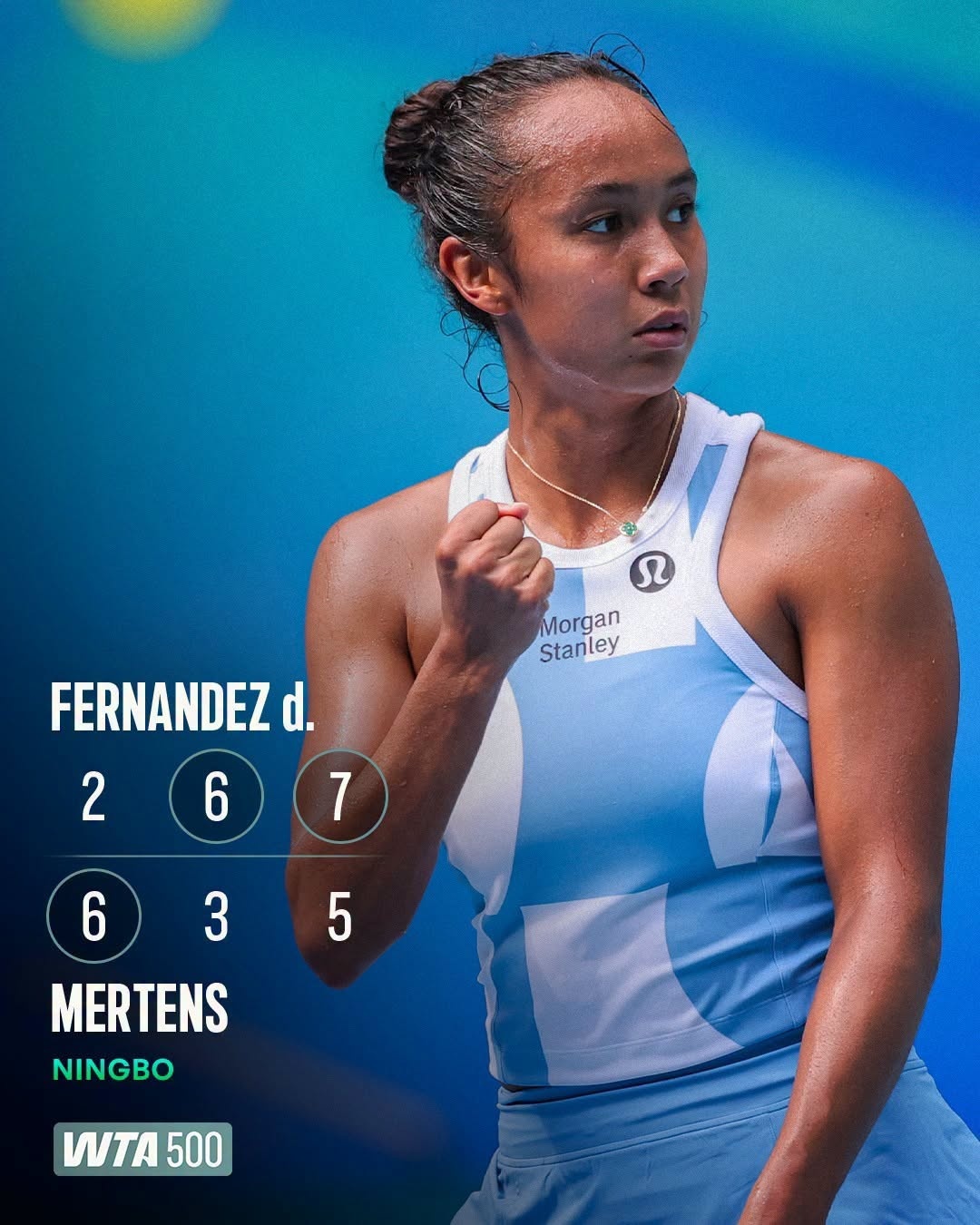
The match shown in the image features Leylah Fernandez and Elise Mertens at the WTA 500 tournament in Ningbo. The displayed score indicates a closely contested match, with Fernandez celebrating an important moment.
What makes tennis thrilling is not simply who hits the hardest ball. It is the ability to recognize weaknesses, adapt under pressure, and execute the right shot when the stakes are highest.
In tennis, physical talent creates opportunities, but intelligent decisions help turn those opportunities into victories.
1. The Thrill of Competition: Every Point Has a Story
The excitement of tennis comes from its uncertainty. A player can dominate one game and struggle in the next. A comfortable lead can disappear, while a player who appears to be losing can suddenly discover a winning strategy.
Every rally is a small tactical battle.
-
Should the player attack the opponent's backhand?
-
Is it better to hit a deep shot or bring the opponent forward with a short ball?
-
Should the player change direction or wait for a better opportunity?
-
When is the right moment to approach the net?
-
Can the player remain calm when facing a break point?
These decisions separate routine play from high-level competition.
The best competitors understand that a tennis match is not won by playing every point the same way. They observe, experiment, learn, and adjust.
2. The Mindset of a Winner: Control What You Can Control
A winning mindset does not mean that a player never feels nervous, frustrated, or tired. Even elite professionals experience pressure.
The difference is how they respond.
A mentally strong player focuses on the next point instead of allowing a previous mistake to control the match. After missing an easy forehand, the player evaluates the error, resets mentally, and prepares for the next rally.
Successful competitors develop several important habits:
Emotional control: They avoid allowing frustration to dictate shot selection.
Concentration: They focus on the current point rather than worrying about the final result.
Confidence: They trust their preparation while remaining willing to change their approach.
Resilience: They continue competing even when the opponent gains momentum.
Composure under pressure: They slow down their decision-making between points and choose a clear tactical objective.
A clenched fist, a determined expression, or a celebration can reflect the emotion of competition. However, the true measure of mental strength is what happens afterward: whether the player can maintain concentration and perform effectively on the next point.
3. Game Adjustments: The Secret Behind Tactical Progress
One of the most important skills in professional tennis is the ability to recognize when a strategy is no longer working.
Imagine a player who repeatedly attacks the opponent's forehand, only to discover that the opponent is comfortable defending that side. Continuing the same pattern may produce the same disappointing result.
A smarter player changes the plan.
Adjustment One: Target the Opponent's Movement
Instead of hitting directly toward the opponent, a player can move the opponent from side to side. Deep crosscourt shots can create space for a later attack down the line.
The objective is not simply to hit a winner immediately. It is to create a position from which the next shot becomes easier.
Adjustment Two: Change the Rhythm
Some players thrive on fast, consistent rallies. Others struggle when the rhythm changes.
A player can introduce higher topspin, lower slices, changes of pace, or a well-timed approach to the net. These variations force the opponent to make new decisions.
However, variation should serve a purpose. Changing pace without a tactical reason can create unnecessary errors.
Adjustment Three: Identify the Weaker Response
During the opening games, a player should observe how the opponent handles different situations.
Does the opponent struggle with high balls to the backhand? Are second serves consistently attackable? Does the opponent have difficulty moving forward? Is the player less comfortable when forced to hit on the run?
These observations provide valuable information for the rest of the match.
Adjustment Four: Adapt the Return Position
A powerful server may force a receiver to stand farther behind the baseline. Against a weaker second serve, moving forward can help the receiver take the ball earlier and put pressure on the server.
The best position depends on the serve, the opponent's tendencies, and the receiver's own strengths.
Adjustment Five: Protect the Lead or Recover From a Deficit
A player leading late in a set may benefit from disciplined shot selection, deep targets, and fewer unnecessary risks.
A player trailing may need to become more proactive, but desperation is rarely a reliable strategy. The objective is to increase pressure intelligently rather than attempt a winner from every position.
4. Tennis IQ: Why the Smartest Player Can Win
Tennis IQ is the ability to understand the tactical situation and select effective responses. It combines anticipation, pattern recognition, court positioning, shot selection, and awareness of the opponent.
A player with excellent tennis IQ asks questions throughout the match:
-
Where does my opponent prefer to hit under pressure?
-
Which shots create the most difficult responses?
-
When should I defend, and when should I attack?
-
How can I use the court to create an advantage?
-
What adjustment is most likely to work against this opponent?
Consider two players with similar physical abilities.
Player A hits powerful shots but repeatedly chooses low-percentage targets. Player B uses depth, changes direction at the right moment, and waits for a ball that can be attacked safely.
Player A may produce more spectacular winners, but Player B can win more points by making better decisions and forcing errors.
This does not mean intelligence alone guarantees victory. Tennis requires technical skill, fitness, movement, and execution. A brilliant tactical plan is ineffective if a player cannot deliver the required shots.
The strongest competitors combine all these qualities.
Tennis IQ is not about being clever on every shot. It is about making the right decision for the situation.
5. Fernandez vs. Mertens: Reading the Match Beyond the Score
The image captures Fernandez celebrating during the Ningbo tournament, with the displayed score showing a competitive contest against Mertens.
A scoreline tells only part of the story. To understand why a player wins, we must also examine the patterns behind the points.
A useful match analysis would consider:
-
First-serve percentage and the effectiveness of second serves.
-
Return depth and the ability to neutralize powerful serves.
-
Winners compared with unforced errors.
-
Success in longer rallies.
-
Performance on break points.
-
Ability to defend wide shots and recover toward the center.
-
Tactical changes as the match progresses.
For example, if Fernandez were consistently winning points by taking the ball early and redirecting her opponent's pace, that would suggest an effective attacking pattern. If Mertens were gaining an advantage through consistency and court coverage, the counter-adjustment might involve opening the court more deliberately or attacking shorter balls.
These are examples of how to analyze a match, not verified claims about the specific points shown in the photograph. A complete assessment would require the match statistics or video.
The important lesson is that a match should be evaluated through both its result and the decisions that produced it.
6. The Mental Battle: Confidence, Pressure, and Momentum
Momentum can influence how players approach a match. After winning several consecutive points, a player may feel more confident and begin executing shots more freely. After losing important points, the same player may become cautious or impatient.
The challenge is to prevent temporary emotions from determining the next decision.
A useful between-point routine includes:
-
Turn away from the previous point and release frustration.
-
Take a controlled breath.
-
Identify one tactical intention for the next point.
-
Choose a clear serve or return target.
-
Commit fully to the decision.
This routine is valuable for professional athletes and recreational players alike.
Mental toughness is not the absence of pressure. It is the ability to continue making sound decisions while pressure exists.
7. How Recreational Players Can Improve Their Tennis IQ
You do not need to play on the professional tour to develop better tactical awareness.
During your next match, try these practical exercises.
The three-shot pattern: Serve or return, play a deep rally ball, and look for a shorter ball to attack. Learn to build the point rather than force an immediate winner.
The opponent observation drill: During the first few games, identify one shot your opponent prefers and one situation that causes difficulty.
The recovery-position drill: After every shot, recover toward a balanced position that allows you to cover likely responses.
The high-pressure drill: Practice playing at 30–30, deuce, and break point. Concentrate on your routine and target selection instead of focusing only on winning.
The post-match review: Write down three things that worked, two mistakes that repeatedly occurred, and one adjustment to test next time.
Over time, these habits help transform random shot-making into deliberate point construction.
Conclusion: The Greatest Advantage Is the Ability to Adapt
The thrill of tennis comes from the combination of athletic ability, strategic thinking, emotional resilience, and unpredictable competition.
A winner is not necessarily the player who hits the hardest or runs the fastest. Often, the decisive advantage comes from recognizing patterns, managing pressure, and making a timely adjustment.
Fernandez and Mertens provide an opportunity to reflect on an essential lesson of competitive tennis: every point contains information, and every match rewards players who can learn from it.
The highest tennis IQ does not guarantee the win, but the ability to think clearly, adapt intelligently, and execute under pressure can make the difference between losing a close match and becoming its winner.
In tennis, the body competes, the mind analyzes, and the player must bring both together when it matters most.