Tennis is one of the most physically demanding sports in the world. While fans often focus on speed, power, and endurance, experienced coaches and sports medicine experts understand that repetitive stress injuries quietly affect thousands of players every year. Among the most common and frustrating injuries is tennis elbow.
Despite the name, tennis elbow does not only affect professional athletes. Recreational players, beginners, gym enthusiasts, office workers, and even manual laborers can develop this painful condition. However, tennis players remain especially vulnerable because of the repetitive motion involved in serving, forehands, backhands, and gripping the racquet.
From the perspective of professional coaches and physical medicine specialists in the United States, tennis elbow is rarely caused by one single moment. Instead, it develops gradually through accumulated stress, poor mechanics, overtraining, and lack of recovery.
Understanding the early warning signs can prevent small irritation from becoming a long-term injury that affects performance and everyday life.
What Is Tennis Elbow?
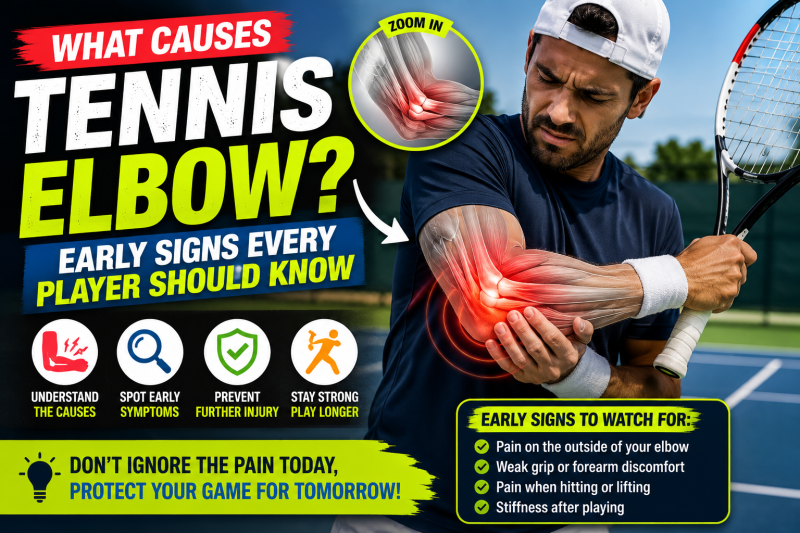
Tennis Elbow, medically known as lateral epicondylitis, is an overuse injury affecting the tendons on the outside of the elbow.
The condition occurs when tiny tears develop in the tendons that connect forearm muscles to the elbow. These muscles help stabilize the wrist and allow gripping motions during tennis strokes.
Over time, repetitive strain creates inflammation, degeneration, and pain.
Professional sports doctors often describe tennis elbow as a “load management problem.” The body simply receives more stress than it can recover from effectively.
Why Tennis Players Commonly Develop Tennis Elbow
Tennis involves thousands of repetitive arm movements during training and matches.
Each stroke creates force traveling through:
- the wrist
- forearm
- elbow
- shoulder
When technique, equipment, or recovery becomes inefficient, the elbow absorbs excessive stress repeatedly.
According to many USA tennis coaches, amateur players are often more vulnerable than professionals because they lack efficient biomechanics.
Professionals generate power through:
- legs
- hips
- core rotation
- timing
Beginners frequently swing mainly with the arm.
That arm-dominant motion dramatically increases tendon strain.
The Most Common Causes of Tennis Elbow
1. Poor Backhand Technique
One-handed backhands often place enormous stress on the elbow if mechanics are incorrect.
Many recreational players hit late contact points while muscling the ball entirely with the forearm.
Professional coaches constantly emphasize:
- early preparation
- shoulder rotation
- relaxed grip pressure
- body-driven movement
Without those fundamentals, the elbow compensates excessively.
2. Gripping the Racquet Too Tightly
One hidden cause of tennis elbow is grip tension.
Nervous or inexperienced players often squeeze the racquet extremely hard during rallies. This creates continuous forearm muscle activation that overloads the tendons.
Sports medicine experts frequently advise players to maintain relaxed hands and smoother rhythm during strokes.
A death grip on the racquet creates unnecessary strain.
3. Using the Wrong Tennis Racquet
Equipment matters more than many players realize.
Certain racquets increase vibration and shock transfer into the arm, especially:
- very stiff racquets
- heavy frames
- incorrect grip sizes
- poor string tension setups
Beginner players using advanced professional racquets often experience elbow discomfort because the frame punishes off-center contact more aggressively.
Arm-friendly racquets with softer construction can significantly reduce injury risk.
4. Overtraining Without Recovery
One of the biggest mistakes recreational players make is increasing playing volume too quickly.
A player who suddenly jumps from:
- once per week
to - daily intensive training
places tremendous stress on unconditioned tendons.
Unlike muscles, tendons recover slowly.
Professional physical therapists constantly remind athletes that tendon injuries often develop silently before pain becomes obvious.
5. Incorrect String Setup
Strings influence arm stress dramatically.
Tight polyester strings create firmer impact feel and greater vibration. Advanced players may tolerate this because of refined mechanics and conditioning, but beginners often struggle.
Many sports doctors recommend softer multifilament or synthetic gut strings for players experiencing elbow discomfort.
6. Weak Forearm and Shoulder Muscles
Weak stabilizing muscles force the elbow to absorb additional stress during repeated impacts.
Tennis is not only an arm sport.
Proper movement requires coordinated strength from:
- shoulders
- scapular muscles
- rotator cuff
- core
- legs
When those systems are weak, the elbow compensates.
Early Signs Every Player Should Know
One of the most dangerous aspects of tennis elbow is how gradually it develops.
Players often ignore the first warning signs until the injury becomes severe.
Recognizing symptoms early can prevent months of recovery.
Mild Pain on the Outside of the Elbow
This is the classic first symptom.
Players usually notice soreness on the outer elbow after hitting sessions, especially following backhands or serves.
Initially, the discomfort may disappear after rest.
That temporary relief often tricks athletes into ignoring the problem.
Weak Grip Strength
Many players suddenly notice difficulty gripping objects firmly.
Simple tasks such as:
- opening jars
- shaking hands
- carrying bags
- lifting water bottles
may trigger discomforte.
Grip weakness is a major early indicator of tendon overload.
Pain During Backhands
Backhands commonly aggravate tennis elbow because of wrist stabilization demands.
Players may feel sharp discomfort specifically during contact or follow-through.
Professional coaches often identify this symptom immediately during training sessions.
Morning Stiffness
Tendon injuries frequently create stiffness after inactivity.
Players may wake up with tightness around the elbow that improves gradually throughout the day.
This stiffness signals tendon irritation.
Reduced Racquet Control
As forearm fatigue increases, players often lose precision.
Shots begin spraying long or wide because stabilizing muscles weaken under stress.
Many athletes mistakenly believe they are simply “playing badly” rather than recognizing injury development.
Burning Forearm Sensation
Some players describe burning or aching sensations extending down the forearm after long hitting sessions.
This often reflects cumulative tendon overload.
Why Ignoring Tennis Elbow Is Dangerous
One major mistake athletes make is trying to “play through” tendon pain.
Unlike muscle soreness, tendon injuries worsen progressively when overloaded continuously.
Professional sports doctors warn that untreated tennis elbow can eventually lead to:
- chronic degeneration
- prolonged weakness
- reduced playing ability
- long-term pain
Early intervention matters enormously.
The earlier players respond, the faster recovery becomes.
The Difference Between Soreness and Injurey
Many athletes struggle distinguishing normal soreness from actual injury.
General muscle soreness typically:
- improves within 24–48 hours
- affects larger muscle groups
- decreases during warm-up
Tennis elbow pain often:
- localizes around the outer elbow
- returns repeatedly
- worsens with gripping
- becomes sharper during strokes
Persistent tendon pain should never be ignored.
How Professional Coaches Prevent Tennis Elbow
Elite tennis academies place major emphasis on injury prevention.
Professional coaches understand that healthy training continuity matters more than short-term overtraining.
Technique Refinement
Efficient mechanics reduce unnecessary stress dramatically.
Coaches prioritize:
- proper spacing
- relaxed swing rhythm
- body rotation
- footwork efficiency
Good movement distributes force throughout the body instead of isolating stress into the arm.
Progressive Workload
Smart coaches increase training volume gradually.
Sudden workload spikes remain one of the biggest predictors of tendon injury.
Recovery Scheduling
Professional athletes dedicate enormous time to:
- stretching
- massage therapy
- mobility work
- hydration
- sleep
Recovery is part of training, not separate from it.
Physical Doctor Advice for Recovery
Sports medicine physicians typically approach tennis elbow through load reduction and rehabilitation rather than quick fixes.
Relative Rest
Complete inactivity is not always necessary.
However, reducing aggravating activities becomes critical during flare-ups.
Doctors often recommend temporary reduction in:
- serving volume
- heavy backhands
- high-intensity sessions
The goal is calming tendon irritation while maintaining general fitness.
Ice and Inflammation Management
Ice may help reduce temporary irritation after activity.
Many doctors recommend:
- 15–20 minutes post-training
- avoiding excessive icing throughout the day
Inflammation management should support healing, not completely suppress natural recovery processes.
Strengthening Exercises
Modern rehabilitation focuses heavily on strengthening rather than passive treatment alone.
Eccentric forearm exercises often help rebuild tendon capacity safely.
Physical therapists may also target:
- shoulder stability
- scapular control
- wrist endurance
- grip strength
Mobility and Flexibility Work
Tight forearm muscles increase tendon tension.
Stretching programs can help improve tissue mobility and reduce strain accumulation.
Equipment Evaluation
Sports doctors frequently collaborate with coaches and racquet specialists to evaluate:
- grip size
- string tension
- racquet stiffness
- swing weight
Minor adjustments sometimes create major relief.
Why Older Players Are More Vulnerable
Tendon elasticity decreases with age.
Players over 35 often experience slower recovery and greater sensitivity to repetitive stress.
This does not mean older athletes cannot play aggressively.
It simply means recovery quality becomes more important.
Many veteran recreational players improve longevity by emphasizing:
- warm-up quality
- mobility work
- strength training
- recovery discipline
Warm-Up Mistakes That Increase Injury Risk
One of the most overlooked injury factors is poor warm-up preparation.
Many recreational players begin serving immediately after arriving at the court.
This is extremely risky.
Professional warm-ups gradually activate:
- shoulders
- forearms
- hips
- core muscles
Cold tendons tolerate force poorly.
A proper 10–15 minute warm-up dramatically reduces injury risk.
Emotional Frustration and Tennis Elbow
Tennis elbow affects more than physical performance.
Many athletes experience emotional frustration because the injury disrupts consistency and confidence.
Players often feel trapped between wanting to improve and fearing pain.
Professional sports psychologists and coaches emphasize patience during recovery.
Trying to rush tendon healing often delays progress further.
Can Beginners Develop Tennis Elbow?
Absolutely.
In fact, beginners are often at higher risk because of:
- inefficient technique
- excessive arm tension
- poor timing
- incorrect equipment
Many first-time players mistakenly believe more force creates better shots.
In reality, efficient timing and body movement generate power more safely.
The Role of Strength Training
Modern tennis training increasingly emphasizes athletic development.
Strength training protects joints by improving force distribution across the body.
Important focus areas include:
- forearm endurance
- rotator cuff strength
- scapular stability
- core control
- leg strength
A stronger body reduces elbow overload.
Nutrition and Tendon Health
Sports medicine experts also recognize nutrition’s role in tissue recovery.
Healthy tendon function benefits from:
- hydration
- protein intake
- collagen-supportive nutrition
- anti-inflammatory foods
Poor recovery habits compound repetitive stress problems.
Why Professional Players Still Get Tennis Elbow
Even elite athletes experience tendon injuries despite world-class support systems.
The reason is simple:
Professional tennis produces enormous repetitive force.
Players hit thousands of balls weekly at extreme speeds. Even with perfect mechanics, cumulative stress can overwhelm tissue capacity.
However, professionals usually manage symptoms earlier because of constant medical monitoring.
Returning to Tennis After Recovery
Returning too quickly remains one of the biggest recurrence risks.
Physical doctors often recommend gradual progression:
- pain-free mobility
- strengthening phase
- light hitting
- controlled rallying
- full match intensity
Skipping stages frequently causes setbacks.
Long-Term Prevention Strategies
Experienced coaches emphasize sustainable habits rather than temporary fixes.
Best prevention strategies include:
- proper stroke mechanics
- relaxed grip pressure
- arm-friendly equipment
- progressive training loads
- regular strength training
- quality recovery routines
Consistency protects the body.
When Players Should See a Doctor
Athletes should seek professional evaluation if:
- pain persists for several weeks
- grip weakness increases
- daily activities become painful
- symptoms worsen despite rest
Early diagnosis improves recovery outcomes significantly.
Complete Tennis Elbow Guide
- Tennis elbow symptoms
- Tennis elbow causes
- Tennis elbow and backhand
- Tennis elbow and serve
- Tennis elbow racquet setup
- Tennis elbow string tension
- Tennis elbow grip size
- Tennis elbow rehabilitation
- Tennis elbow prevention
- Tennis elbow return to tennis
- Tennis elbow case study
Final Thoughts
Tennis elbow is one of the most common injuries in the sport, yet many players still misunderstand how it develops.
The condition rarely appears overnight. It usually begins quietly through repetitive overload, poor mechanics, equipment mistakes, and insufficient recovery. Recognizing the early warning signs can prevent small irritation from becoming a serious long-term problem.
From the perspective of professional coaches and sports medicine doctors, the solution is not fear of training.
The solution is smarter training.
Efficient technique, balanced workload, quality recovery, and proper equipment allow players to improve while protecting the body. Tennis should challenge athletes physically, but pain should never become normal.
The earlier players respect their body’s warning signs, the greater their chances of staying healthy, improving consistently, and enjoying the sport for many years to come.