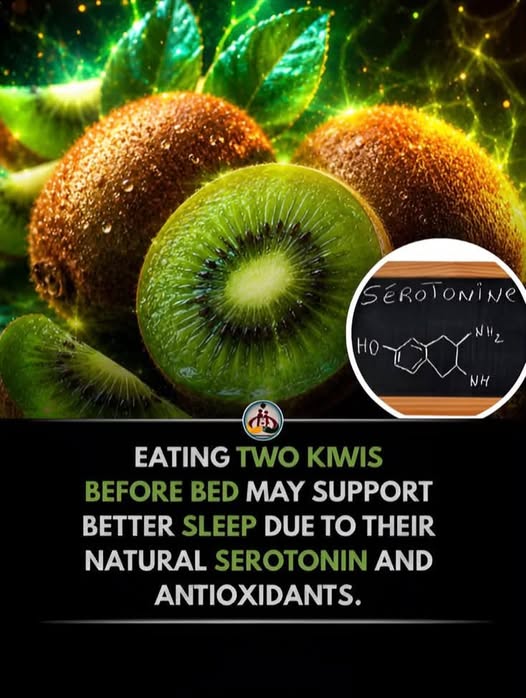
While the caption perfectly highlights the sleep and antioxidant benefits, eating two kiwis before bed offers a complete performance package for a tennis player—far beyond just shut-eye.
Here is the full breakdown of benefits tailored specifically to the demands of a tennis player, from the baseline to the locker room:
1. Enhanced Deep Sleep & Growth Hormone Release (The Ultimate Recovery)
Tennis matches involve constant sprinting, lunging, and abrupt stops, causing microscopic muscle tears. The serotonin and folate in kiwis help regulate your circadian rhythm, increasing REM sleep efficiency. Crucially, better deep sleep triggers a higher release of human growth hormone (HGH) overnight. This accelerates the repair of your rotator cuff, elbows, knees, and ankles, meaning you wake up with less stiffness and are ready for back-to-back tournament days.
2. Superior Electrolyte Balance (Cramp Prevention)
Tennis players lose massive amounts of sodium and potassium through sweat. Kiwis are actually higher in potassium per gram than bananas. Eating two kiwis helps restore this balance, ensuring your muscle fibers fire efficiently. This significantly reduces the risk of debilitating night cramps or mid-match calf spasms during long third-set tiebreaks.
3. Rapid Inflammation Reduction (Joint Health)
Tennis is notoriously harsh on joints (tennis elbow, patellar tendinitis, and wrist strain). Beyond Vitamin C, kiwis contain unique antioxidants like polyphenols and Vitamin E that work synergistically to scavenge free radicals produced during high-intensity rallies. This lowers systemic inflammation, helping reduce synovial fluid swelling in your joints, so your movement stays light and explosive.
4. Reinforced Immune Defense (Tournament Travel Shield)
Traveling to different cities, handling sweat-drenched gear, and physical exhaustion lower your immune system—making you susceptible to "tournament flu." Two kiwis provide over 100% of your daily Vitamin C requirement, acting as a shield for your immune cells. This keeps your respiratory tract clear, ensuring you don't lose training days to a cold mid-season.
5. Visual Acuity & Hand-Eye Coordination
Kiwis contain lutein and zeaxanthin, carotenoids that protect the macula of the eye. For a tennis player, this translates to improved contrast sensitivity—allowing you to track the spinning yellow ball against the court surface, stadium lights, or background crowd more sharply. Better vision means better timing on your serve returns.
6. Mental Composure & Stress Regulation
Serotonin isn't just for sleep; it is the brain's primary calming neurotransmitter. Tennis is a sport of "points," requiring you to reset emotionally after a bad double fault or a controversial line call. Elevated serotonin levels help lower cortisol (the stress hormone), promoting a "short memory" mentality. You will find it easier to stay in the zone and execute your tactics under pressure.
7. Sustained Glycogen Restoration (Without the Crash)
Eating before bed can spike blood sugar and interrupt sleep. Kiwis have a low glycemic index. They replenish the liver glycogen you burned during your evening match or practice session with a slow-release energy drip. This prevents a 3 AM hypoglycemic crash, ensuring you don't wake up starving and ruin your sleep cycle.
7 Tennis Performance Benefits of Eating 2 Kiwis at Night
The Tennis Player's "Game-Day" Protocol:
-
For Night Matches: Eat 2 kiwis with the skin on (washed thoroughly) about 60 to 90 minutes before you plan to sleep post-match. The skin doubles the fiber content, which aids digestion without bloating.
-
For Morning Tournaments: If you have an early 8 AM match, eating 2 kiwis 30 minutes before warm-ups can provide a quick, natural energy boost and hydrate you gently without the heavy stomach feeling of a large carb meal, thanks to their 85% water content.
In short: Better sleep = faster recovery; lower inflammation = healthier joints; potassium = no cramps; lutein = better vision; and serotonin = cooler head. For a tennis player, that tiny fuzzy fruit is practically a legal performance enhancer.