
1pagewebsite's blog

Can Cat Purrs Help Tennis Players Recover Bone and Tissue?

A tennis health blog exploring cat purr frequencies, bone healing, and recovery after injury.

Quick Overview

Could the gentle vibration of a cat's purr help a tennis player recover from a bone injury, tendon strain, or muscle damage?

Cat purrs commonly fall within approximately 20–150 Hz, a frequency range that overlaps with some forms of vibration therapy studied in medicine.

The Ultimate Cross-Training Duo: Why Tennis Players Should Dive into the Sea

As a tennis player, you know the drill. The squeak of shoes on a hard court, the jarring stop-and-go of a baseline rally, and the repetitive strain on your dominant shoulder. Tennis is a high-impact sport that demands explosive power, agility, and mental fortitude.

But what if the secret to elevating your game—and extending your career—isn't found on the court, but in the ocean?

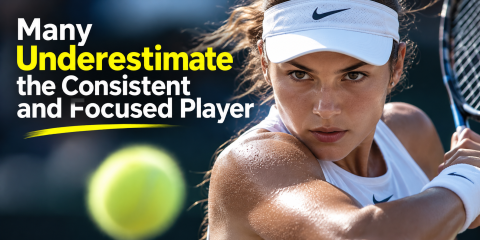
Many Underestimate the Consistent and Focused Player

In tennis, everyone notices the big serve. Everyone watches the flashy forehand. Everyone talks about the player who hits winners from impossible angles. But the players who win the most, who last the longest, and who quietly dominate their age groups are rarely the ones who grab the highlight reels. They are the consistent ones. The focused ones. The players who show up every day, do the work, and never let their standards slip. And most people underestimate them completely.

Effort Over Iron: Why Tennis Players Must Keep the Body Focused and Fit

As a tennis professional who has spent decades on American courts, I have watched thousands of players chase strength in the wrong places. They load up barbells, grind through machines, and chase personal records on the bench press, believing that heavier iron is the only path to a stronger game. The research tells a different story. For the tennis player who wants to stay focused, fit, and durable on court, the most powerful tool may already be attached to your body.

The Missing Mile: Why Every Tennis Player Must Add Walking to Their Daily Routine

As a tennis professional in the United States, I have watched thousands of players chase better forehands, faster serves, and smarter doubles strategy. But the players who last the longest, recover the fastest, and stay on court into their 70s and 80s almost always share one habit that has nothing to do with a racket. They walk. A lot.

The Path to a Longer Life: Why Tennis Players Should Add Dance Lessons

As a tennis professional who has spent decades on American courts, I have seen what separates players who last from those who fade. The ones who keep playing into their 70s and 80s do not just hit balls. They move well. They stay balanced. They think fast. And increasingly, the science shows that one of the best ways to sharpen those qualities is not another bucket of serves. It is dance.

The Path to a Longer Life: A Tennis Expert's Perspective from the United States

As a tennis professional who has spent decades on American courts, from public parks in Florida to USTA National Senior Games in Iowa, I can tell you with absolute certainty: the racket in your hand is one of the most powerful longevity tools available to you. The science has now caught up with what those of us in the tennis community have observed for generations. Regular tennis play does not just keep you active. It fundamentally rewires the aging process.

The Longevity Rankings: Tennis Leads by a Wide Margin