
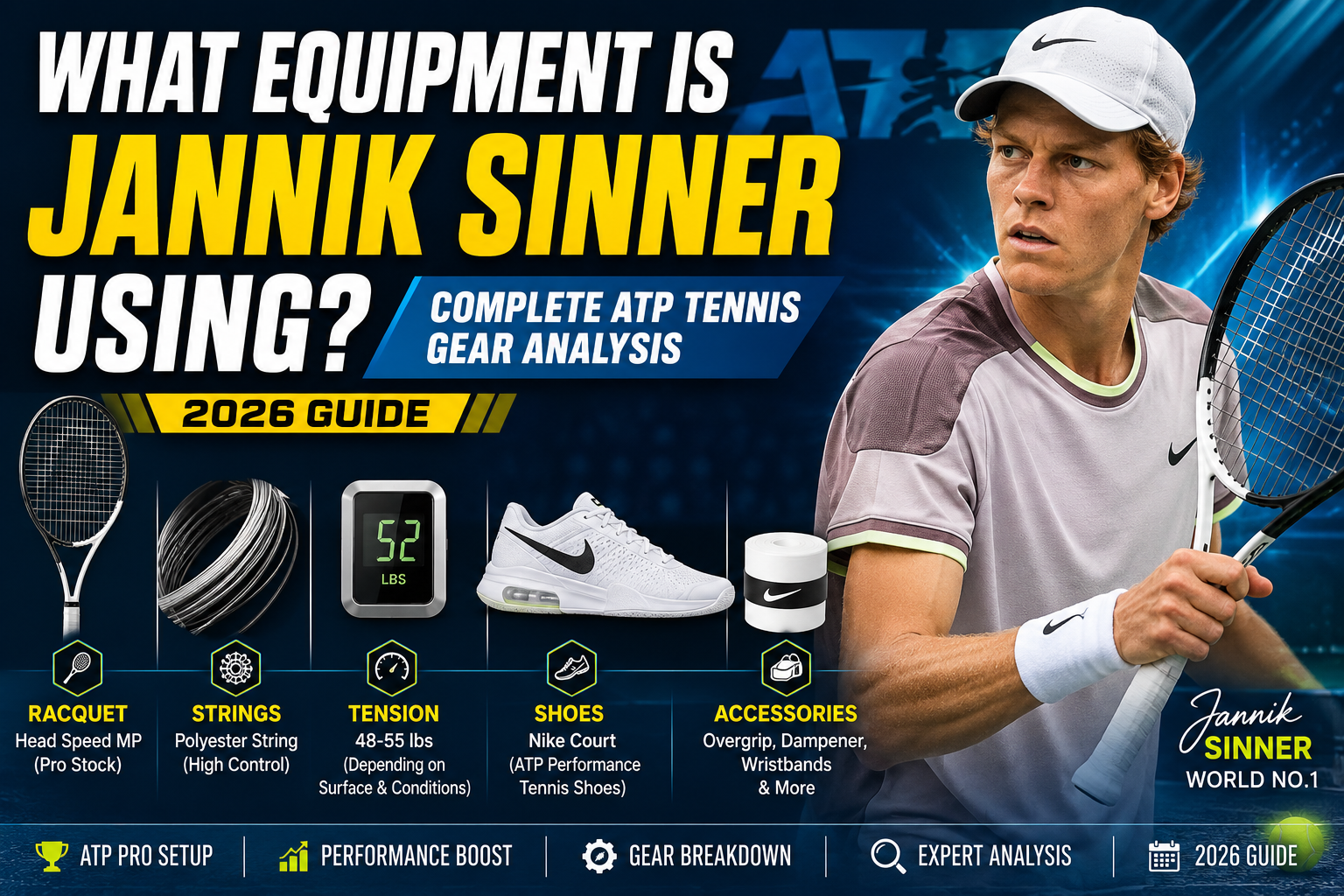
Modern professional tennis is no longer just about talent and fitness. At the highest ATP level, equipment plays a massive role in power, control, spin, movement, recovery, and consistency. One of the best examples today is Jannik Sinner, whose rise to the top of the ATP Tour has been powered not only by elite technique and mental toughness, but also by carefully selected tennis equipment.
From racquet tension and string setup to shoes, grips, dampeners, apparel, and recovery gear, every detail matters in modern tennis. ATP coaches often analyze equipment because even small changes can affect shot depth, timing, spin production, footwork, and injury prevention.
This complete USA ATP-style tennis analysis explains the equipment used by Jannik Sinner, why he uses it, how it helps his game, and what amateur players can learn from his setup.
Who Is Jannik Sinner?
Jannik Sinner is known for:
- Explosive baseline power
- Clean ball striking
- Heavy pace from both wings
- Exceptional movement
- Calm mental approach
- Efficient biomechanics
His game style combines controlled aggression with modern baseline consistency. Because of this, his equipment setup focuses heavily on:
- Precision
- Stability
- Spin control
- Fast court movement
- Shot acceleration
Jannik Sinner Tennis Racquet Analysis
Racquet Model
Sinner is associated with the:
- Head Speed MP
- Customized professional ATP version
Although ATP players often use pro-stock customized frames, the retail cosmetic resembles the Head Speed series.
Why Sinner Uses This Type of Racquet
ATP coaches analyze racquets based on:
- Swing weight
- Flexibility
- Stability
- String pattern
- Frame beam thickness
The Head Speed style frame gives Sinner:
- Excellent control at high swing speed
- Easier acceleration
- Fast reaction on returns
- Precision on baseline rallies
- Better balance between spin and flat hitting
This matches his aggressive baseline game perfectly.
Racquet Specifications Breakdown
Approximate Setup
Professional setups constantly change, but analysts estimate:
| Specification | Approximate Value |
|---|---|
| Head Size | 100 sq inches |
| Weight | 330g+ strung |
| Balance | Slightly head-light |
| String Pattern | 16x19 |
| Swing Weight | High ATP-level stability |
ATP Coach Analysis
A heavier customized frame helps Sinner:
- Absorb heavy incoming pace
- Redirect power efficiently
- Maintain stability during rallies
- Hit through the court aggressively
However, recreational players should not automatically copy ATP-level weight because it requires elite strength and timing.
Jannik Sinner String Setup
Strings are one of the most important parts of tennis equipment.
String Type
Sinner reportedly uses:
- Polyester strings
- High-control ATP-level setup
Polyester strings are popular on the ATP Tour because they provide:
- Spin generation
- Durability
- Control at high swing speeds
- Precision under pressure
Jannik Sinner Racquet Tension Analysis
One of the most searched tennis topics is racquet tension.
Approximate Tension
ATP professionals often string between:
- 48–55 lbs
Sinner’s setup reportedly stays within this modern ATP range depending on:
- Surface
- Weather
- Balls
- Humidity
- Match conditions
Why Tension Matters in Tennis
Lower tension gives:
- More power
- More comfort
- Larger sweet spot
- Extra ball pocketing
Higher tension gives:
- More control
- Sharper response
- Flatter trajectory
- Increased precision
ATP players constantly adjust tension based on tournament conditions.
ATP Coach Explanation of Sinner’s Tension Style
Sinner hits extremely hard from the baseline.
To control that power, his setup likely balances:
- Medium-low tension
- High swing speed
- Polyester control strings
This combination helps him:
- Generate heavy pace
- Maintain control
- Produce spin
- Attack aggressively
Why Recreational Players Should Not Copy ATP Tension Exactly
Many beginners make a mistake:
They copy ATP setups without understanding skill level differences.
ATP professionals generate massive racquet-head speed.
Most amateur players need:
- More comfort
- More power assistance
- Lower physical stress
For recreational players:
| Player Level | Recommended Tension |
|---|---|
| Beginner | 45–50 lbs |
| Intermediate | 48–53 lbs |
| Advanced | 50–55 lbs |
Jannik Sinner Tennis Shoes Analysis
One of the most important pieces of equipment in modern tennis is footwear.
Sinner has worn professional-level tennis shoes associated with:
- Nike
ATP coaches analyze shoes based on:
- Stability
- Durability
- Cushioning
- Court traction
- Lateral support
Why Shoes Matter So Much in Tennis
Tennis involves:
- Explosive stops
- Lateral movement
- Sliding
- Sprinting
- Jumping
- Rotational loading
Wrong shoes can lead to:
- Ankle injuries
- Knee stress
- Poor movement
- Foot pain
- Reduced performance
Hard Court vs Clay Court Shoes
Hard Court Shoes
Hard courts require:
- Durability
- Cushioning
- Impact absorption
Clay Court Shoes
Clay shoes focus on:
- Controlled sliding
- Herringbone traction
- Better clay release
ATP professionals sometimes adjust shoe setups based on surfaces.
ATP Analysis of Sinner’s Movement
Sinner moves extremely efficiently because of:
- Light footwork
- Explosive first step
- Balance recovery
- Core stability
His shoes support:
- Quick directional changes
- Baseline acceleration
- Defensive recovery
- Long rallies
Apparel and Clothing Setup
Professional ATP players carefully select apparel for:
- Sweat control
- Temperature regulation
- Mobility
- Weight reduction
Sinner typically wears lightweight performance apparel optimized for:
- Speed
- Comfort
- Breathability
Wristbands and Sweat Management
ATP players often use:
- Wristbands
- Towels
- Grip drying products
Sweat management matters because slippery hands reduce:
- Racquet control
- Spin precision
- Stability
Overgrip Setup
Most ATP professionals use overgrips.
Benefits include:
- Better grip feel
- Sweat absorption
- Consistent handling
- Faster racquet control
Sinner likely changes overgrips frequently during tournaments.
Dampener Analysis
Many ATP players use vibration dampeners.
Benefits may include:
- Reduced vibration sensation
- Improved comfort feel
- Better confidence psychologically
However, dampeners do not significantly reduce injury risk scientifically.
Tennis Bag Equipment
Professional ATP bags usually contain:
- Multiple racquets
- Shoes
- Towels
- Recovery tools
- Hydration products
- Extra grips
- String accessories
- Nutrition items
Tournament players prepare for every possible condition.
Recovery Equipment Used by ATP Players
Elite players focus heavily on recovery.
Equipment commonly used includes:
- Foam rollers
- Massage guns
- Compression gear
- Ice therapy
- Stretch bands
Recovery is essential because ATP schedules are physically brutal.
Nutrition and Hydration Equipment
Sinner’s team likely monitors:
- Electrolytes
- Water intake
- Energy gels
- Recovery drinks
Proper hydration affects:
- Endurance
- Muscle function
- Reaction speed
- Mental focus
Why Equipment Matters More in Modern Tennis
Modern ATP tennis is faster and more physical than ever.
Players now hit:
- Harder
- Faster
- With more spin
This increases the importance of:
- Racquet customization
- Shoe technology
- String selection
- Recovery systems
ATP Coach Analysis: Why Sinner’s Setup Fits His Game
Sinner’s equipment complements his playing style perfectly.
Aggressive Baseline Hitting
His racquet and strings help produce:
- Heavy pace
- Flat penetration
- Controlled aggression
Fast Court Movement
His shoe setup supports:
- Explosive recovery
- Efficient balance
- Defensive coverage
Consistency Under Pressure
His equipment helps maintain:
- Shot stability
- Timing
- Confidence
Common Mistakes Amateur Players Make
Copying ATP Equipment Exactly
Professional setups are customized for elite athletes.
Amateurs often struggle because:
- Racquets are too heavy
- Strings are too stiff
- Tension is too high
Using Wrong Tennis Shoes
Running shoes are dangerous for tennis because they lack:
- Lateral stability
- Court traction
- Side support
Always use real tennis shoes.
Ignoring String Maintenance
Dead strings reduce:
- Spin
- Control
- Comfort
Recreational players should restring regularly.
Recommended Equipment Setup for Recreational Players
Beginners
Recommended:
- Lightweight racquet
- Softer strings
- Comfortable shoes
Intermediate Players
Focus on:
- Control balance
- Spin-friendly strings
- Durable court shoes
Advanced Players
Advanced players may experiment with:
- Tension changes
- Custom weight
- Precision setups
Surface-Specific Equipment Strategy
Hard Courts
Recommended priorities:
- Cushioning
- Durable outsole
- Arm-friendly strings
Clay Courts
Recommended priorities:
- Sliding control
- Spin-oriented setup
- Clay traction outsole
Grass Courts
Recommended priorities:
- Grip stability
- Fast reaction movement
- Lower bounce adaptation
How ATP Players Customize Racquets
Professional customization may include:
- Lead tape
- Silicone in handle
- Weight balancing
- Grip reshaping
These changes affect:
- Stability
- Power
- Swing speed
- Feel
Mental Confidence and Equipment
Many ATP coaches believe equipment affects confidence psychologically.
When players trust their setup, they swing:
- More freely
- More aggressively
- More consistently
Confidence is critical in high-pressure tennis.
Lessons Recreational Players Can Learn From Sinner
Focus on Movement First
Footwork matters more than expensive equipment.
Choose Comfortable Gear
Comfort improves consistency.
Match Equipment to Skill Level
Do not blindly copy ATP professionals.
Maintain Equipment Properly
Replace:
- Shoes
- Strings
- Overgrips
before performance drops.
Future Tennis Equipment Trends
Modern tennis technology continues evolving.
Future innovations may include:
- Smart sensors
- AI swing analysis
- Advanced cushioning
- Improved string materials
- Personalized customization
ATP players constantly test new technologies.
FAQ
What racquet does Jannik Sinner use?
Jannik Sinner is associated with the Head Speed MP cosmetic with professional ATP customization.
What string tension does Jannik Sinner use?
ATP professionals typically use tensions around 48–55 lbs depending on surface and conditions.
What shoes does Jannik Sinner wear?
Sinner has been associated with Nike professional tennis footwear designed for elite ATP movement and durability.
Why do ATP players use polyester strings?
Polyester strings provide:
- Better control
- More spin
- Increased durability
especially at high swing speeds.
Should beginners copy ATP equipment?
No. ATP equipment is customized for elite-level strength and timing.
Beginners usually benefit more from:
- Softer strings
- Lighter racquets
- More forgiving setups
Why are tennis shoes different from running shoes?
Tennis shoes provide:
- Lateral stability
- Court traction
- Side-to-side support
Running shoes are designed mainly for forward motion.
How often should recreational players restring racquets?
General guideline:
- Restring as many times yearly as you play weekly
Example:
- Play 2 times weekly = restring about twice yearly minimum
Frequent players may need more often.
Conclusion
Jannik Sinner represents the modern evolution of ATP tennis: explosive power, elite movement, mental discipline, and carefully optimized equipment.
His setup — including racquet customization, polyester strings, controlled tension, professional footwear, and recovery systems — is designed specifically for the demands of elite competition.
However, the biggest lesson recreational players should learn is not to copy ATP professionals blindly. Instead, players should understand why equipment matters and choose setups appropriate for their own skill level, playing style, and physical needs.
The right tennis equipment can improve:
- Comfort
- Injury prevention
- Shot consistency
- Movement
- Confidence
In modern tennis, equipment is no longer just an accessory — it is part of performance itself.