
By a Tennis Performance Analyst
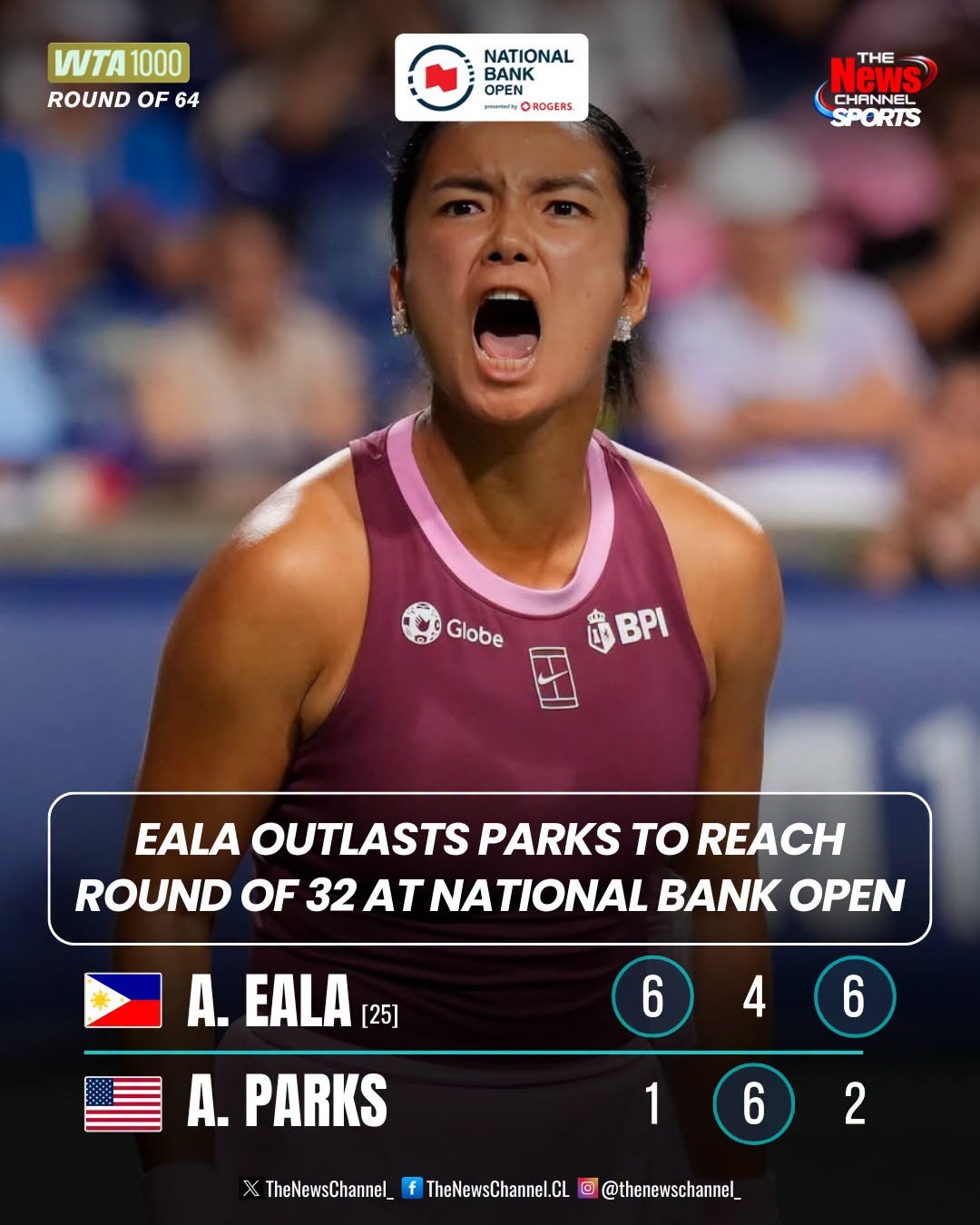
Alex Eala's three-set victory over Alycia Parks at the National Bank Open was more than just another win on the WTA Tour. It was a masterclass in resilience, tactical adaptation, and emotional intelligence under pressure. While the scoreboard tells the story of a 6-1, 4-6, 6-2 victory, the deeper story lies in how Eala responded when momentum shifted, how she solved problems during the match, and how she transformed crowd energy into a competitive advantage.
Champions are rarely defined by how they play when everything is going well. They are defined by how they respond when adversity arrives. Against Parks, Eala demonstrated many of the qualities that separate elite competitors from merely talented players.
The Mindset of a Champion
Great Players Forget the Last Point
One of the defining characteristics of championship tennis is possessing an exceptionally short memory.
Every player misses forehands.
Every player double-faults.
Every player loses service games.
The difference is what happens next.
Throughout the match, Eala never appeared emotionally trapped by previous mistakes. Rather than carrying disappointment into the next rally, she immediately reset mentally and focused entirely on the next opportunity.
That ability prevents a single mistake from becoming three or four consecutive lost games.
This is one of the psychological habits consistently seen among the world's best players.
Instead of asking:
"Why did I miss?"
Elite competitors ask:
"What do I do on the next ball?"
Eala repeatedly demonstrated this mentality.
Playing to Win Instead of Playing Not to Lose
Many players become conservative under pressure.
They shorten their swings.
They guide the ball.
They avoid risk.
Champions do the opposite.
Even during important moments, Eala continued trusting her aggressive patterns.
She stepped inside the baseline.
She attacked shorter balls.
She dictated rallies whenever opportunities appeared.
Rather than hoping Parks would miss, Eala consistently attempted to create the winning shot herself.
That confidence is one of the foundations of elite tennis.
Emotional Control Creates Better Decisions
Professional tennis is an emotional sport.
Momentum changes quickly.
One game can completely change an entire set.
Yet Eala managed her emotions remarkably well.
She celebrated positive moments with passion while quickly returning to a composed, focused mindset before the next point.
Instead of allowing frustration to affect her decision-making, she converted emotional energy into faster movement and greater court intensity.
That emotional discipline often determines who wins close matches.
Tactical Adjustments That Changed the Match
The best players rarely stick to one strategy for an entire match.
Instead, they constantly gather information.
Every rally provides data.
Every return provides clues.
Every serve reveals tendencies.
Eala showed excellent tactical awareness throughout the contest.
Identifying Parks' Patterns
Alycia Parks possesses tremendous power.
When given rhythm, she can overwhelm opponents with aggressive first-strike tennis.
Instead of trying to out-hit Parks on every rally, Eala intelligently disrupted that rhythm.
She forced Parks to continually adjust.
That prevented Parks from settling comfortably into her preferred style of play.
Changing Rally Height and Depth
One subtle adjustment involved changing the height of her topspin.
Rather than hitting identical rally balls, Eala mixed deeper, heavier shots with flatter drives.
This constantly altered Parks' contact point.
Changing ball height forces opponents to continuously adjust timing.
That seemingly small variation often produces errors without requiring spectacular winners.
Using Angles to Open the Court
Instead of simply exchanging crosscourt rallies, Eala repeatedly created wider angles.
Once Parks moved outside the doubles alley, the court naturally opened.
Eala then attacked the exposed space with controlled aggression.
This pattern forced Parks into uncomfortable defensive positions instead of allowing her to dictate.
Intelligent Serve Placement
As the match progressed, Eala varied her serve locations more effectively.
Rather than repeatedly targeting one area, she mixed:
- Wide serves
- Body serves
- Flat serves up the T
- Different speeds
- Different spins
Changing locations prevented Parks from anticipating returns and stepping aggressively inside the baseline.
At the highest level, unpredictability is often more valuable than raw serving power.
Defensive Tennis That Became Offensive
One of Eala's greatest strengths is her transition from defense to offense.
Many players simply survive difficult rallies.
Eala often turns them around.
When stretched wide, she doesn't merely float the ball back.
She uses deep defensive shots that immediately force her opponent to hit one extra quality shot.
That extra shot frequently becomes the opening she needs to regain control.
Modern tennis increasingly rewards players who defend aggressively rather than passively.
Fitness That Wins Third Sets
The final set demonstrated another important advantage.
As rallies accumulated, Eala's movement remained explosive.
She continued chasing difficult balls.
She maintained intensity between points.
She recovered quickly after long exchanges.
Physical endurance is not simply about running longer.
It allows players to continue making smart tactical decisions even when fatigue begins affecting both competitors.
This becomes especially valuable late in three-set matches.
The Crowd Advantage: When the Stadium Becomes Your Ally
One of the most fascinating aspects of Eala's recent matches has been the remarkable level of crowd support she receives.
While tennis is an individual sport, spectators can significantly influence the emotional atmosphere of a match.
Supportive crowds do not hit the ball or win points, but they can affect momentum, confidence, and energy for both players.
Against Parks, Eala appeared to draw confidence from the enthusiastic support in the stands.
Confidence Reinforcement
Every spectacular winner was followed by loud applause.
Every successful defensive point generated excitement.
Those reactions reinforce confidence.
Positive crowd energy can help players maintain emotional intensity during physically demanding matches.
Additional Pressure on the Opponent
Supportive crowds may also increase psychological pressure on opponents.
Every missed opportunity feels larger.
Every Eala winner receives an emotional response from thousands of spectators.
Experienced professionals train to manage these environments, but a strongly partisan crowd can still make momentum swings feel more dramatic.
Fuel During Difficult Moments
The biggest advantage of crowd support often appears during adversity.
When trailing or facing pressure, hearing encouragement from thousands of fans can provide an emotional lift.
Rather than feeling isolated after losing several points, players may feel energized to continue competing aggressively.
While the outcome is always determined by the players' performances, positive crowd support can contribute to resilience and sustained intensity.
Why Eala Continues to Improve
Perhaps the most encouraging aspect of Eala's development is that her game is becoming increasingly complete.
She is no longer relying solely on athleticism or shot-making.
She is learning how to:
- Solve problems during matches.
- Make tactical adjustments under pressure.
- Manage emotions effectively.
- Stay physically strong in long contests.
- Compete confidently in front of large crowds.
These are the qualities that consistently distinguish top players on the WTA Tour.
Final Thoughts
Alex Eala's victory over Alycia Parks was not simply a display of powerful groundstrokes or athletic movement—it reflected the broader qualities required to succeed at the highest level of professional tennis. Her composure under pressure, willingness to adjust tactics, disciplined shot selection, and sustained physical intensity allowed her to regain control after dropping the second set and finish strongly in the decider.
The enthusiastic support from the crowd added energy to the atmosphere and appeared to reinforce her confidence during key moments. While crowd support alone does not determine results, combining that emotional boost with sound tactical execution and mental resilience made Eala especially difficult to overcome.
If she continues refining these aspects of her game while maintaining her competitive mindset, she will be well positioned to challenge more of the WTA's top players and continue climbing the rankings. Every tournament offers new tests, but performances like this suggest she is developing the complete toolkit of a modern champion.