Introduction: Winning Is About More Than Hitting the Ball
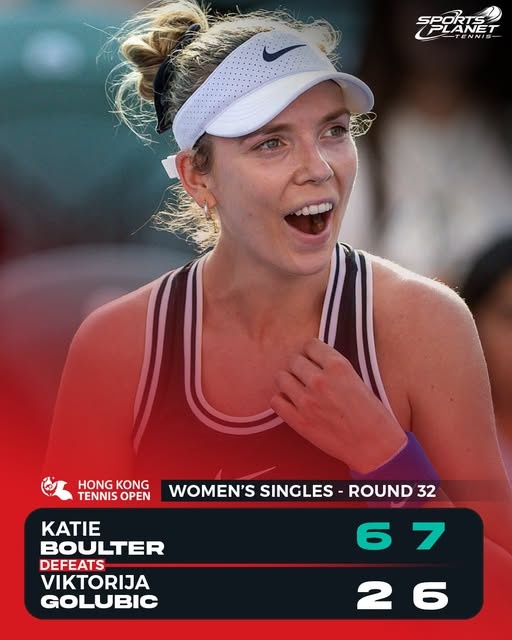
Katie Boulter opened her Hong Kong Tennis Open campaign with a straight-sets victory over Viktoriya Golubic, winning 6–2, 7–6 according to the match scoreboard.
The result provides an excellent opportunity to study an important lesson in tennis: winning requires more than powerful groundstrokes. It requires the ability to recognize patterns, adjust tactics, control positioning, and make better decisions under pressure.
A match can change dramatically from one set to the next. A strategy that works comfortably early in a match may become less effective when an opponent changes the pace, improves their consistency, or begins anticipating your shots.
For players of all levels, the challenge is learning how to adapt without abandoning the fundamentals.
Let's examine the lessons players can take from this result and turn them into practical training exercises.
1. Match Analysis: Two Sets, Different Challenges
The scoreboard shows two different set scores: 6–2 and 7–6. While the result confirms Boulter's straight-sets win, the score alone does not establish exactly which tactical adjustments decided the match.
Nevertheless, the contrast between the sets provides a useful framework for understanding tennis strategy.
First set: Establishing control
A comfortable opening set can result from several factors: effective serving, disciplined shot selection, good court positioning, or pressure applied to the opponent's weaker patterns.
For developing players, the lesson is to build a game plan before trying to hit winners.
Focus on these fundamentals:
-
Serve with a purpose: Aim for a specific area rather than simply trying to serve harder.
-
Recover toward a balanced position: After each shot, prepare for the opponent's next response.
-
Build rallies with margin: Use reliable crosscourt shots before attempting difficult down-the-line winners.
-
Recognize short balls: Move forward when the opponent gives you an opportunity to attack.
The objective is to make your opponent play difficult shots while keeping your own errors under control.
Second set: Handling a closer contest
A tiebreak set often places greater emphasis on execution under pressure. Every point becomes an opportunity to demonstrate composure, patience, and tactical clarity.
When a match becomes tighter, players should avoid changing everything at once.
Instead, ask three questions:
-
Is my current strategy still creating opportunities?
-
Am I losing points because of poor positioning, shot selection, or execution?
-
What single adjustment could improve the next few points?
The best adjustment is usually a specific, measurable change rather than an emotional reaction.
For example, a player who repeatedly misses long may benefit from adding more topspin and height over the net. A player who struggles with wide balls may need to improve their recovery steps rather than swing harder.
The key lesson: When the match becomes difficult, simplify your decisions and return to patterns you can execute reliably.
2. The Drill of the Game: Move, Adjust, Recover
One of the most valuable training priorities for tennis players is learning to arrive at the ball in balance.
Many beginners can run quickly toward a ball but still struggle to hit it cleanly. The problem is often not speed alone. It is the timing of their adjustment steps, distance from the ball, and preparation before contact.
Drill objective
Develop the ability to move toward the ball, establish the correct hitting distance, execute a controlled shot, and recover for the next ball.
Equipment needed
-
Tennis racket
-
Tennis balls
-
Four to six training cones
-
A tennis court
-
A coach or hitting partner
Step-by-step instructions
Step 1: Establish the ready position
Stand near the center of the baseline with your feet approximately shoulder-width apart, knees slightly bent, and weight balanced on the balls of your feet.
Keep your racket in front of your body.
Step 2: React to the feed
The coach feeds a ball to the forehand or backhand side. The player makes an initial movement toward the ball.
Step 3: Use adjustment steps
As the player approaches the ball, use short, controlled steps to establish the correct distance.
Avoid running directly into the contact point. Leave enough space for the racket to swing freely.
Step 4: Hit with balance
Make contact in a comfortable hitting zone. Maintain a stable head position and avoid leaning excessively backward or sideways.
Step 5: Recover
After hitting, push off and return toward a suitable recovery position based on the direction and depth of the shot.
Step 6: Repeat with changing directions
Alternate between forehand, backhand, short balls, and deeper feeds.
Recommended training volume
-
Beginners: 3 sets of 8 balls.
-
Intermediate players: 4 sets of 10 balls.
-
Advanced players: 4 sets of 12 balls with unpredictable feeds.
Rest briefly between sets and prioritize movement quality over speed.
3. Game Adjustments: Five Tactical Lessons Every Player Should Learn
Adjustment 1: Change direction at the right time
One common mistake is changing direction too early in a rally.
Players see an opening down the line and immediately attempt a winner, even when they are stretched or off balance.
A better approach is to build the point crosscourt, wait for a shorter or more comfortable ball, and then change direction.
Practice drill: Hit three controlled crosscourt shots before attempting a down-the-line shot. Start with cooperative feeding, then progress to live rallies.
Adjustment 2: Use depth to control the court
Deep shots can push an opponent behind the baseline and reduce their ability to attack.
However, depth must be balanced with control. A ball that lands long gives away the point regardless of how powerful it feels.
Practice drill: Place target zones in the final two metres of the court. Score one point for a deep ball that lands in the target area and another for successfully recovering after the shot.
Begin with 10 balls per side and record your success rate.
Adjustment 3: Recognize when to attack
Not every ball deserves maximum power.
A short ball that sits comfortably in front of you may be an attacking opportunity. A deep ball that forces you backward usually calls for a more defensive response.
Train yourself to recognize three situations:
-
Defensive: Return the ball safely and regain balance.
-
Neutral: Build the rally with controlled depth and direction.
-
Attacking: Move forward and use the available space to apply pressure.
The ability to identify these situations can be more valuable than simply increasing racket-head speed.
Adjustment 4: Improve recovery footwork
After hitting a wide forehand, players often admire their shot or remain too close to the sideline.
A strong opponent can exploit the open court immediately.
Your recovery position should depend on the direction, depth, and quality of your shot. It does not always mean returning to the exact center of the baseline.
Practice drill: The coach feeds a wide forehand, followed by a ball to the opposite side. The player must hit the first ball, recover with controlled steps, and prepare early for the second.
Start slowly. Increase the pace only when the player can maintain balance.
Adjustment 5: Manage pressure between points
When the score becomes tight, players frequently rush their preparation, change tactics impulsively, or attempt low-percentage winners.
A simple between-point routine can help.
-
Turn away briefly from the previous point.
-
Take a controlled breath.
-
Identify why the point was won or lost.
-
Choose one clear intention for the next point.
-
Return to the baseline ready to execute.
For example: "Serve wide, recover, and play the next ball crosscourt."
A short tactical instruction is easier to follow than several technical corrections at once.
4. Why Tennis IQ Matters More Than Power Alone
Tennis intelligence is the ability to recognize what is happening and select the appropriate response.
Two players can possess similar physical abilities but achieve different results because one understands how to construct points more effectively.
A player with strong tactical awareness learns to:
-
Identify recurring patterns in an opponent's shots.
-
Recognize when the opponent is out of position.
-
Change height, depth, pace, and direction when necessary.
-
Understand when to defend instead of forcing a winner.
-
Maintain concentration during important points.
-
Adjust tactics without losing technical discipline.
This is especially important for recreational players aged 40–75. Efficient movement, good positioning, and intelligent shot selection can reduce unnecessary running and help preserve energy throughout a match.
You do not need to hit every ball harder. Often, you need to arrive at the ball earlier, make a better decision, and recover more efficiently.
5. A Practical Match-Adjustment Training Session
Use this 30-minute session to train decision-making rather than repeating the same shot without a tactical purpose.
Warm-up — 5 minutes
Practice mini-tennis, gentle groundstrokes, and controlled movement with adjustment steps.
Footwork and spacing — 8 minutes
Have the coach alternate between short and deep feeds to both sides. Focus on getting into position before swinging.
Directional control — 7 minutes
Play crosscourt rallies, then attack a suitable short ball down the line.
Defend and recover — 5 minutes
The coach moves the player from one side of the court to the other. The goal is to recover balance and prepare for the next shot.
Pressure points — 5 minutes
Play short tiebreak-style situations beginning at 4–4. Before every point, the player must state a simple tactical intention.
Track three measures: shots landed in the intended target, successful recoveries, and unforced errors.
These measures help identify whether the player is improving their decision-making, not just hitting more balls.
6. Coaching Insight: When Repeating Instructions Is Not Enough
Some tennis students continue making the same footwork mistakes even after the coach repeatedly tells them to bend their knees, move their feet, or adjust their distance from the ball.
In these situations, repeating the instruction louder or more frequently may not solve the problem.
Instead, simplify the task.
For example, place a cone near the expected contact area and ask the student to move into position before hitting. Feed the ball slowly enough for the student to recognize the distance required.
Then progress through three stages:
-
Guided movement: The coach provides predictable feeds and demonstrates the correct spacing.
-
Variable movement: The coach changes the direction and depth of the ball.
-
Decision-making: The student must recognize the ball, adjust independently, and recover without verbal reminders.
Give feedback on one key element at a time. If the student struggles with distance, focus on distance before introducing several additional technical corrections.
The goal is to develop independent movement habits that remain effective during actual competition.
Conclusion: The Winner Is the Player Who Adjusts
Katie Boulter's straight-sets victory over Viktoriya Golubic at the Hong Kong Tennis Open offers a useful starting point for discussing tactical discipline and performance under pressure.
The most important lesson for developing players is not to copy a professional player's power or technique without understanding the situation. It is to develop the ability to recognize patterns, choose appropriate shots, adjust footwork, and respond intelligently when a match changes.
The next time you step onto the court, ask yourself:
Am I simply hitting the ball, or am I solving the problem in front of me?
Train your movement. Understand your positioning. Choose your shots with purpose. And when your original strategy stops working, make the adjustment.
That is how tennis players develop stronger match intelligence, greater consistency, and a more complete game.
Editorial note: The match result and set scores are taken from the supplied scoreboard. The tactical lessons and drills above are instructional analysis, not claims about specific rallies or statistics from the match.