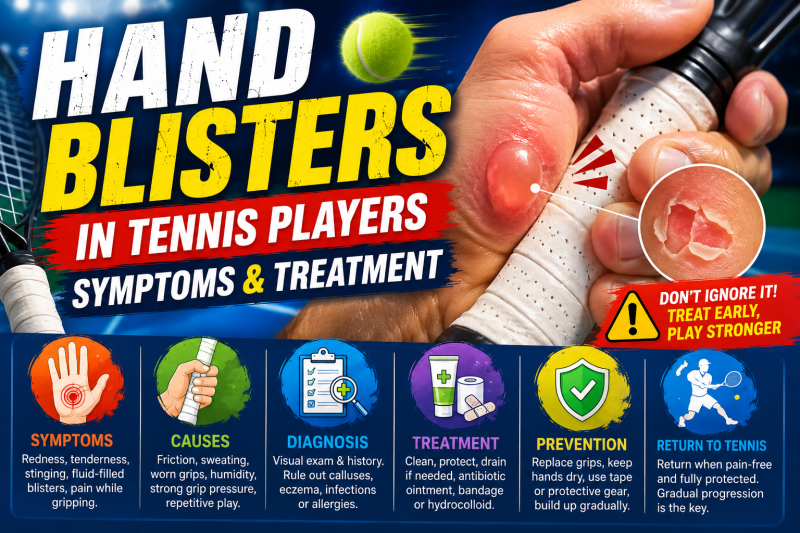
Hand blisters are one of the most common skin problems affecting tennis players. They develop when repeated friction and shear occur between the hand and racket grip, particularly during long practices, tournaments, hot weather, or sudden increases in playing time.
A blister may begin as a small hot spot—an area of redness, warmth, tenderness, or stinging. Continued friction can separate layers of skin and produce a fluid-filled pocket.
For tennis players, even a small blister can become a major problem. Every serve, forehand, backhand, and volley requires repeated gripping and movement of the racket handle. Once the blister opens, exposed skin can become extremely painful and may be more vulnerable to contamination and infection.
Symptoms
Early Warning: The Hot Spot
The first sign is often not a visible blister.
A player may notice:
- Localized redness
- Warmth
- Tenderness
- Stinging
- Burning or irritation
- Increased sensitivity while gripping the racket
This is an important warning stage. Continuing to play through the irritation can allow the problem to progress into a full blister.
Fluid-Filled Blister
With continued friction, a raised pocket containing clear or slightly yellowish fluid may develop.
Common locations include:
- Base of the thumb
- Palm
- Index finger
- Middle finger
- Areas where the fingers contact the grip
- Pressure points created by the racket handle
Open or Torn Blister
During a long match, the blister roof may tear.
This can expose sensitive underlying skin and cause:
- Sharp pain
- Burning or stinging
- Bleeding
- Difficulty gripping the racket
- Increased sensitivity to sweat
- Greater risk of contamination
An open blister can turn a manageable skin problem into a significant obstacle to tournament play.
Causes
1. Repetitive Friction and Shear
The primary cause is repeated mechanical stress between the skin and racket grip.
During tennis, the hand repeatedly:
Grips → rotates → squeezes → releases → re-grips
During high-intensity points, players may also tighten their grip, increasing pressure and friction.
Long rallies, repeated serving, and extended practice sessions can therefore increase blister risk.
2. Sweaty Hands and Humidity
Hot and humid conditions can make blister formation more likely.
Sweat can soften the outer layer of the skin, while moisture can increase sliding between the hand and grip.
This combination can make the skin more susceptible to repetitive shear.
Tournament players may notice the problem becoming worse when playing outdoors during hot summer conditions.
3. New or Worn-Out Grips
Equipment can also contribute.
Potential triggers include:
- Slick or worn overgrips
- Poorly fitted grips
- Excessively hard grips
- Improper grip size
- Grip surfaces that become slippery when wet
- Infrequent overgrip replacement
A worn grip may force the player to squeeze the racket harder to maintain control, potentially increasing friction.
4. Excessive Grip Pressure
Some players naturally tighten their grip during important points.
This may happen during:
- Serves
- Return of serve
- Fast rallies
- Break points
- Match points
- Defensive shots
Constantly gripping the racket too tightly can increase pressure on specific areas of the hand.
5. Sudden Increase in Tennis Volume
Blisters are particularly common when a player suddenly increases playing time.
Examples include:
- Starting tournament competition
- Playing several matches in one day
- Returning after a long break
- Beginning intensive tennis training
- Switching to a different racket
- Changing grip size
- Playing in a hotter climate
The skin needs time to adapt to repeated mechanical stress.
Diagnosis
Most tennis-related blisters can be diagnosed through a simple visual examination and history.
A healthcare professional may identify:
- A raised fluid-filled blister
- Localized redness
- A ruptured blister
- An exposed friction wound
- Skin thickening or callus formation
The location and history of repetitive racket friction are usually important clues.
Conditions That Can Look Similar
Not every blister-like lesion is caused by tennis friction.
Other possibilities include:
- Calluses
- Dyshidrotic eczema
- Contact dermatitis
- Fungal infection
- Bacterial infection
- Other inflammatory skin conditions
If the lesion repeatedly returns despite removing friction, spreads beyond the normal grip-contact area, or has unusual features, medical evaluation may be appropriate.
Treatment
Treatment depends on whether the blister is intact, very large, or already open.
Small, Intact Blisters
If a blister is small and manageable, the safest approach is generally to protect it rather than deliberately opening it.
The blister roof provides a natural protective covering.
Recommended care includes:
- Gently wash the area with soap and water.
- Dry the surrounding skin carefully.
- Protect the blister with a clean dressing.
- Reduce the friction causing the problem.
- Avoid repeatedly squeezing or cutting the blister.
A hydrocolloid dressing can provide cushioning and protection for some players.
Large or Painful Blisters
Large, painful blisters can interfere with normal racket grip.
Some may require drainage, particularly when they are under significant pressure.
However, self-draining a blister carries a risk of infection. When drainage is necessary, having it performed by an appropriate healthcare professional is the safest option, particularly for athletes with medical conditions that increase infection risk.
If a blister is drained, the overlying skin should generally be preserved when possible because it can help protect the underlying tissue.
Torn Blisters
An open blister should be treated more like a superficial skin wound.
General care includes:
- Wash gently with clean water and mild soap.
- Remove obvious dirt or contamination.
- Do not aggressively scrub the exposed tissue.
- Cover it with a clean, non-stick dressing.
- Protect it from additional racket friction.
- Change the dressing when wet or dirty.
A healthcare professional can advise whether an antimicrobial or other topical product is appropriate.
When to Watch for Infection
A tennis player should seek medical advice if a blister develops signs of infection such as:
- Increasing redness
- Spreading redness
- Increasing warmth
- Swelling
- Pus or cloudy drainage
- Worsening pain
- Red streaking
- Fever or feeling unwell
These symptoms are different from the normal soreness expected from a simple friction blister.
Prevention
For tennis players, preventing the blister is much easier than trying to play through an open one.
1. Replace Worn Overgrips
A fresh overgrip can improve traction and reduce the need to squeeze the racket excessively.
Replace grips when they become:
- Slick
- Smooth
- Saturated with sweat
- Torn
- Compressed
- Difficult to control
2. Manage Sweat
Players who sweat heavily from their hands may benefit from tennis-specific grip and sweat-management strategies.
Depending on personal preference, these may include:
- Absorbent overgrips
- Sweat-absorbing towels
- Grip powders
- Frequent grip replacement
- Drying the hand between games
The goal is to maintain a secure grip without excessive squeezing.
3. Protect High-Risk Areas
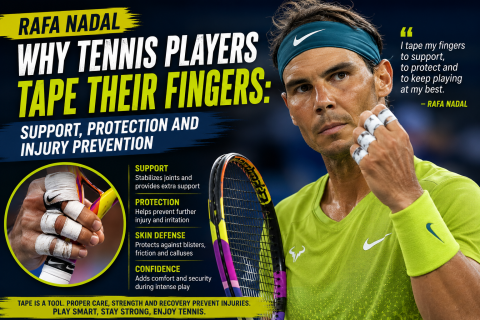
If a player repeatedly develops blisters in the same location, protective taping or a specialized blister dressing can be applied before practice or competition.
Common high-friction areas should be identified during training rather than waiting until tournament day.
4. Build Playing Time Gradually
When returning to tennis after a break, increase training volume progressively.
Avoid going immediately from little or no tennis to several hours of intense practice.
The skin, muscles, tendons, and joints all need time to adapt.
Return to Tennis
The decision to return should depend on the condition of the skin rather than a fixed number of days.
A small, intact blister may become manageable relatively quickly if friction is removed and the area is protected.
An open blister may require several days or longer depending on its size, location, and depth.
Before returning to unrestricted tennis, the player should be able to:
- Grip the racket comfortably
- Swing without significant pain
- Serve without the wound reopening
- Maintain a normal grip
- Protect the affected area adequately
- Complete a practice session without worsening symptoms
Gradual Return
A practical progression is:
Stage 1: Daily activities without significant pain
Stage 2: Short, easy racket sessions
Stage 3: Controlled groundstrokes
Stage 4: Longer hitting sessions
Stage 5: Serves and high-intensity drills
Stage 6: Full match play
If the blister begins burning or reopening during the progression, stop and reassess the protection and grip conditions.
Case Review: The Tournament Player With a Hand Blister
Consider a recreational or competitive player entering a tournament after increasing practice volume.
During the first session, the player notices a small hot spot at the base of the thumb.
Rather than stopping, the player continues practicing serves and groundstrokes.
Several hours later, the area becomes a raised fluid-filled blister.
The following day, repeated racket friction causes the blister to open.
Now the player has a different problem: the original friction injury has become an exposed wound that hurts whenever the racket grip contacts the affected area.
The important lesson is that the hot-spot stage is the best opportunity to intervene.
Reducing friction early, changing the overgrip, protecting the area, and adjusting training volume may prevent a small irritation from becoming a tournament-limiting injury.
Key Takeaway for Tennis Players
A hand blister may look minor, but it can significantly affect tennis performance because the hand is in constant contact with the racket.
The best strategy is:
Recognize the hot spot → reduce friction → protect the skin → manage the grip → return gradually.
Do not ignore persistent pain, recurrent blisters, or signs of infection.
For competitive players, prevention should begin before the tournament, not after the blister has already opened.
Medical disclaimer: This article is for general educational purposes and does not replace an examination by a qualified healthcare professional. Seek medical care for severe, recurrent, infected, or unusually appearing skin lesions.