
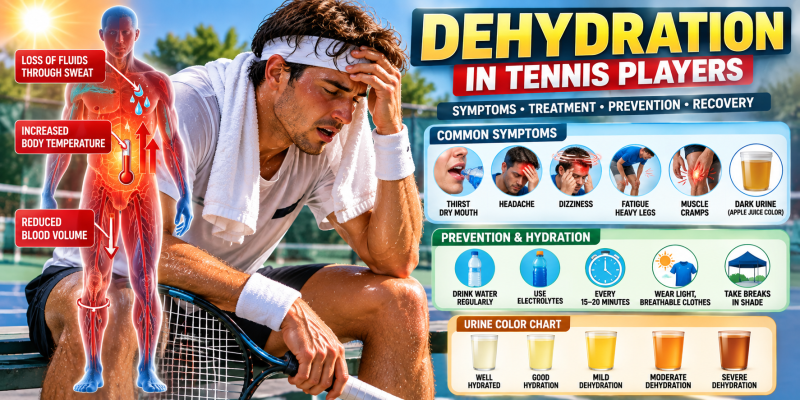
Dehydration is a common concern for tennis players, particularly during long matches, intense training sessions, and outdoor competition in hot and humid conditions. It occurs when the body loses more fluid than it takes in, disrupting normal circulation, temperature regulation, and physical performance.
From a tennis sports medicine perspective, hydration is essential for maintaining endurance, footwork, coordination, concentration, and recovery. Even a modest fluid deficit can make a demanding match feel harder, increase perceived exertion, and affect a player's ability to maintain consistent performance.
Tennis players in tropical climates, including the Philippines, should pay particular attention to fluid replacement because high humidity can make it harder for sweat to evaporate efficiently.
The key principle: Start tennis adequately hydrated, replace fluids regularly during play, and recognize warning signs before dehydration progresses to a serious heat-related illness.
Quick Overview: Dehydration in Tennis
- What it is: A fluid deficit caused by losing more water than the body replaces.
- Common causes: Heavy sweating, prolonged matches, inadequate drinking, hot weather, and gastrointestinal illness.
- Early symptoms: Thirst, dry mouth, darker urine, headache, and unusual fatigue.
- Performance effects: Reduced endurance, increased perceived effort, impaired concentration, and difficulty maintaining movement quality.
- Treatment: Stop or reduce exercise, cool down, and replace fluids according to the severity of symptoms and fluid losses.
- Prevention: Individualized hydration planning, appropriate electrolyte replacement, and regular monitoring.
- Emergency warning signs: Confusion, collapse, seizures, or altered consciousness require immediate medical attention.
What Causes Dehydration in Tennis Players?
Tennis combines repeated sprints, explosive movements, changes of direction, and periods of sustained physical effort. During these activities, the body produces heat and releases sweat to help maintain a safe internal temperature.
When fluid losses exceed fluid intake, dehydration can develop.
1. Excessive Sweating During Long Matches
Singles matches and extended training sessions may last for several hours. Players who sweat heavily can lose substantial amounts of fluid, particularly when competing in hot weather.
Individual sweat rates vary considerably. Some players lose relatively little fluid, while others may lose more than one liter per hour under demanding conditions.
2. Hot Weather and High Humidity
High temperatures increase heat stress, while humidity reduces the effectiveness of sweat evaporation. Players may continue sweating heavily without experiencing sufficient cooling.
3. Inadequate Fluid Intake
Some players avoid drinking because they do not want to interrupt their rhythm, while others simply forget during competitive matches.
Arriving at the court already dehydrated makes it more difficult to maintain fluid balance throughout a session.
4. Loss of Sodium and Other Electrolytes
Sweat contains water and electrolytes, especially sodium. Players who sweat heavily for extended periods may need to replace some of these losses.
However, drinking excessive amounts of plain water can also dilute blood sodium and cause exercise-associated hyponatremia. This is a separate, potentially dangerous condition and is not corrected by simply drinking more water.
5. Illness and Digestive Problems
Fever, vomiting, and diarrhea can increase fluid losses. Players who are sick, unusually weak, or unable to maintain normal hydration should postpone strenuous training until they recover.
Dehydration Symptoms Every Tennis Player Should Recognize
Recognizing symptoms early can help prevent a manageable fluid deficit from becoming a medical problem.
Early Warning Signs
Watch for:
- Increased thirst.
- Dry mouth or sticky lips.
- Darker-than-usual urine.
- Reduced urination.
- Headache.
- Unusual tiredness.
- Reduced energy during rallies.
- Increased perceived effort during normal drills.
These symptoms are useful warning signs, but no single symptom reliably confirms dehydration.
Physical and Performance Symptoms
As fluid losses increase, a player may experience:
- Heavy legs and reduced endurance.
- Dizziness or lightheadedness.
- Muscle weakness.
- Increased heart rate during exercise.
- Difficulty concentrating on ball placement.
- Slower recovery between points.
- Reduced movement efficiency.
- Nausea or general discomfort.
Muscle cramps can occur during exercise for several reasons, including neuromuscular fatigue. They should not automatically be attributed to dehydration or electrolyte loss.
Severe Symptoms Requiring Medical Attention
Seek urgent medical care for severe or worsening symptoms, including:
- Persistent dizziness or fainting.
- Very little or no urination accompanied by other concerning symptoms.
- Rapid breathing or a racing heartbeat at rest.
- Persistent vomiting or inability to keep fluids down.
- Severe weakness or unusual drowsiness.
Confusion, seizures, collapse, or loss of consciousness during exercise in the heat may indicate heat stroke or another emergency. Call emergency services and begin appropriate rapid cooling if heat stroke is suspected. Do not attempt to treat these symptoms with water alone.
How Dehydration Affects Tennis Performance
Hydration influences more than thirst. It also affects the cardiovascular system, thermoregulation, and the ability to tolerate sustained physical effort.
1. Reduced Endurance
When fluid losses become significant, maintaining circulation and regulating body temperature become more difficult. A player may tire sooner and struggle to sustain intensity through long rallies.
2. Increased Perceived Effort
A familiar training session may feel much harder when a player is dehydrated, especially in hot conditions.
3. Reduced Concentration
Tennis requires rapid decisions about positioning, timing, shot selection, and opponent movement. Dehydration and heat strain may impair concentration and increase mental fatigue.
4. Difficulty Maintaining Movement Quality
Fatigue can affect footwork, balance, and coordination. A player who is struggling physically should not try to compensate by forcing more intense movement.
5. Greater Heat Stress
Dehydration can contribute to cardiovascular and thermal strain, increasing concern about heat-related illness during prolonged exercise.
How to Assess Hydration Status
No single home test can diagnose dehydration accurately in every situation. Combining several observations is more useful.
1. Monitor Urine Color
Pale-yellow urine often suggests adequate hydration, while consistently dark-yellow urine may indicate that more fluid is needed.
However, urine color can be affected by vitamins, medications, foods, and the timing of urination. Clear urine does not necessarily mean that hydration is optimal.
2. Track Body Weight Before and After Tennis
Weighing yourself before and after training under similar conditions can help estimate sweat losses.
For a more useful estimate, account for fluids consumed and any urine produced during the session.
Approximate sweat loss can be calculated as:
Sweat loss (liters) ≈ pre-exercise weight (kg) − post-exercise weight (kg) + fluid consumed (liters) − urine produced (liters).
For example, if a player starts at 70 kg, finishes at 69 kg, drinks 0.5 liters, and produces no urine during the session, estimated sweat loss is approximately 1.5 liters.
This is an estimate, not a precise measurement. Body weight changes also reflect other factors.
3. Monitor Symptoms and Exercise Conditions
Pay attention to thirst, unusual fatigue, dizziness, heat exposure, session duration, and recovery between training sessions.
Heart rate can provide additional context, but an elevated heart rate alone cannot establish that dehydration is the cause.
Treatment and Rehydration for Tennis Players
Treatment depends on the severity of symptoms and whether another condition, such as heat exhaustion or heat stroke, may be present.
Step 1: Stop or Reduce Exercise
If you develop dizziness, headache, unusual weakness, or other concerning symptoms, stop playing. Move to a cool, shaded, or air-conditioned location and remove excess equipment or clothing.
Do not attempt to finish the match while feeling unwell.
Step 2: Replace Fluids Gradually
If you are fully alert, can swallow normally, and have only mild symptoms, drink water in manageable amounts.
Avoid forcing large quantities of fluid quickly. If symptoms worsen or fail to improve, seek medical advice.
Step 3: Consider Electrolytes When Appropriate
An electrolyte-containing drink may be useful after prolonged exercise, heavy sweating, or substantial fluid loss. A carbohydrate-electrolyte sports drink may also help provide energy during extended tennis sessions.
For significant dehydration caused by vomiting or diarrhea, an appropriate oral rehydration solution may be more suitable than an ordinary sports drink.
Do not use salt tablets or excessive electrolyte supplements without professional advice.
Step 4: Replace Post-Match Fluid Losses
For players who need rapid recovery before another training session, a commonly used sports hydration guideline is to replace approximately 1.25–1.5 liters of fluid per kilogram of body weight lost, spread over the recovery period and accompanied by appropriate food or sodium replacement.
For example, a 1 kg decrease in body weight after exercise may indicate a need for approximately 1.25–1.5 liters of fluid during recovery, depending on fluid intake, urine losses, and the time available before the next session.
This is a guide for post-exercise recovery, not a requirement to drink that amount immediately. Avoid overdrinking.
Step 5: Seek Medical Care for Severe Symptoms
Medical evaluation is necessary if symptoms are severe, persistent, or associated with fainting, confusion, very low urine output, or inability to retain fluids.
Severe dehydration may require intravenous fluids administered by medical professionals. Confusion, collapse, or altered consciousness should be treated as an emergency because heat stroke and other dangerous conditions may be responsible.
Hydration Strategies Before, During, and After Tennis
Before Playing
- Drink fluids regularly throughout the day.
- Begin your session adequately hydrated rather than trying to correct a large deficit immediately before play.
- As a practical starting point, consider approximately 400–600 mL of fluid around 2–3 hours before exercise, adjusting for thirst, body size, weather, and individual needs.
- If you are still thirsty or have signs of inadequate hydration closer to the match, drink additional fluid in a comfortable amount.
- Avoid strenuous tennis when you have a fever, vomiting, diarrhea, or significant illness.
During a Match
- Keep water or an appropriate sports drink accessible.
- Use changeovers and permitted breaks to drink.
- In hot weather or during prolonged matches, many players benefit from drinking small amounts regularly, often around every 15–20 minutes when practical.
- Adjust intake to your sweat rate, thirst, match duration, and environmental conditions.
- Consider electrolytes and carbohydrates for prolonged, intense sessions.
- Avoid both inadequate intake and excessive drinking.
A fixed drinking volume is not suitable for every tennis player. Individual needs vary with body size, intensity, sweat rate, climate, and acclimatization.
After Playing
- Assess how you feel and whether you have recovered normally.
- Use pre- and post-match body weight to estimate fluid losses when practical.
- Replace fluid gradually, alongside meals or snacks containing appropriate amounts of sodium.
- Continue drinking according to thirst and recovery needs.
- Allow sufficient recovery before another demanding session, especially after playing in extreme heat.
How to Prevent Dehydration in Hot and Humid Conditions
1. Develop an Individual Hydration Plan
Record your fluid intake, exercise duration, body weight changes, and symptoms during representative training sessions. This information can help you estimate your sweat rate and build a more appropriate plan.
2. Adapt to the Heat Gradually
Increase training duration and intensity progressively when returning to hot conditions. Acclimatization can improve heat tolerance, but it does not eliminate the need for cooling, rest, and fluid replacement.
3. Wear Breathable Tennis Clothing
Lightweight, breathable clothing may improve comfort during hot weather. Use shade and cooling towels during permitted breaks.
4. Schedule Training Carefully
When possible, train during cooler morning or evening periods. Monitor local heat advisories and follow tournament heat policies.
5. Protect Recovery and Sleep
Adequate sleep, regular meals, and recovery between sessions support training tolerance. Players should avoid stacking long, intense sessions when they are already fatigued or unwell.
6. Learn Your Personal Warning Signs
Some players first notice excessive thirst, while others experience headaches, declining movement quality, or unusual fatigue. Stop and assess symptoms early rather than waiting for severe thirst or exhaustion.
Return to Tennis After Dehydration
The appropriate return-to-play plan depends on how severe the dehydration was and whether heat illness or another medical condition occurred.
Stage 1: Recover and Rehydrate
Rest in a cool environment, replace fluid losses appropriately, and eat normally if you can tolerate food.
Do not return to play while you remain dizzy, nauseated, unusually weak, or otherwise unwell.
Stage 2: Confirm That Symptoms Have Resolved
Before resuming exercise, you should feel back to normal and be able to maintain ordinary food and fluid intake.
A return to baseline body weight and normal urination can provide useful supporting information, but neither measure alone proves that recovery is complete.
Stage 3: Begin Light Tennis Activity
Start with a short, low-intensity session in a cool environment. Begin with gentle movement and controlled hitting rather than competitive rallies or demanding drills.
Stage 4: Increase Duration and Intensity Gradually
If you remain symptom-free, gradually increase the length and intensity of training over subsequent sessions. Reintroduce outdoor heat cautiously.
Stage 5: Return to Competition
Resume competitive tennis when you have recovered fully and can tolerate progressive training without symptoms.
Seek medical clearance if you experienced significant dehydration, fainting, suspected heat illness, or persistent symptoms. A player recovering from heat stroke needs a separate medically supervised return-to-play protocol.
Frequently Asked Questions About Dehydration in Tennis
Can dehydration cause muscle cramps during tennis?
Fluid and electrolyte losses may contribute to cramping in some circumstances, but exercise-associated cramps can also result from fatigue and altered neuromuscular control. Do not assume that every cramp requires extra salt or water.
Is water enough for a tennis match?
Water is often sufficient for shorter sessions when you start hydrated and eat normally. During prolonged, intense matches or heavy sweating, a drink containing electrolytes and carbohydrates may be beneficial.
How can I tell if I am dehydrated during a match?
Thirst, reduced urination, darker urine, headache, and unusual fatigue can be useful clues. Consider these signs alongside body weight changes, weather, exercise duration, and how you feel. No single sign is conclusive.
Can drinking too much water be dangerous?
Yes. Excessive fluid intake during prolonged exercise can dilute blood sodium and cause exercise-associated hyponatremia. Drink according to your needs and avoid gaining body weight through excessive drinking during a session.
Should I play tennis if I feel dizzy?
Stop playing and move to a cool environment. If dizziness is persistent, severe, recurrent, or accompanied by fainting or other concerning symptoms, seek medical assessment. Confusion, collapse, or altered consciousness requires emergency care.
How long should I rest after dehydration?
Mild symptoms may resolve after rest and appropriate fluid replacement, but recovery time varies. Significant dehydration, persistent symptoms, or suspected heat illness requires medical assessment before returning to strenuous exercise.
Final Advice From a Tennis Doctor and Performance Expert
Hydration is an important part of tennis performance, but the goal is not simply to drink as much as possible. The goal is to maintain an appropriate fluid balance, replace losses, and recognize when symptoms require rest or medical care.
Build your hydration plan around your individual sweat rate, match duration, weather conditions, and recovery needs. Use changeovers wisely, pay attention to early warning signs, and never allow competitive pressure to override your health.
Remember: If you develop dizziness or unusual fatigue, stop and assess your condition. If you experience confusion, collapse, seizures, or altered consciousness, seek emergency help immediately.
This educational guide is intended to support tennis injury prevention and performance awareness. It does not replace an individualized medical assessment.