
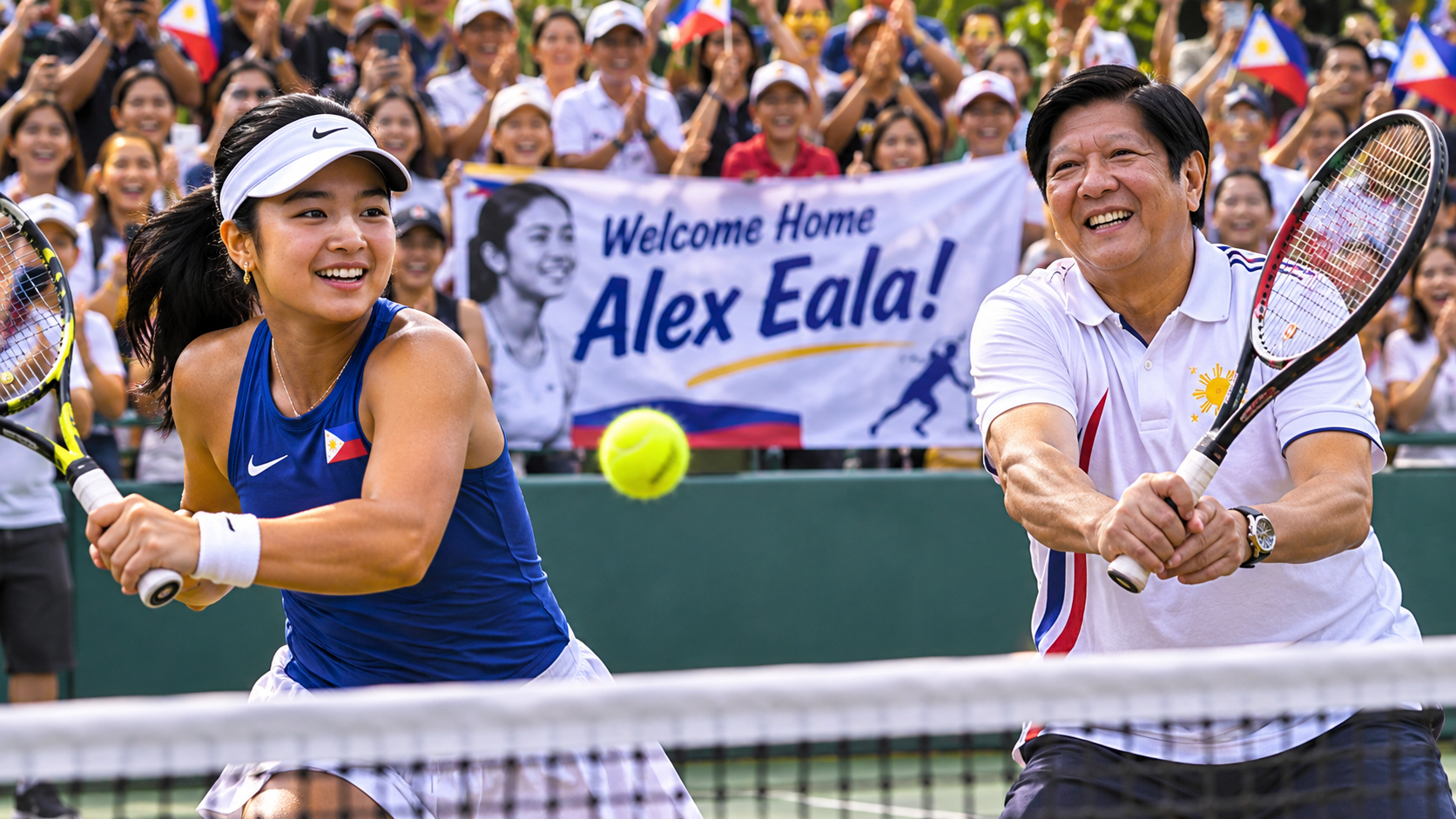
How one Filipina athlete brought national pride, political attention, and renewed hope to Philippine tennis
A Homecoming Bigger Than Tennis
The Philippines has witnessed many memorable sporting celebrations, but the homecoming of tennis sensation Alexandra "Alex" Eala in Pasig City on November 24, 2026, carried a special significance.
This was more than a welcome-home celebration for an accomplished athlete. It was a national moment that brought together sports, public leadership, Filipino identity, and the aspirations of a younger generation.
The presence of no less than President Ferdinand "Bongbong" Marcos Jr. and Education Secretary Sonny Angara demonstrated the growing public recognition of Eala's achievements.
Both government officials stepped onto the tennis court to share a ceremonial rally with the Filipina tennis star. The moment attracted attention, particularly because it placed tennis at the center of a major national celebration.
For many Filipinos, the reception looked like the homecoming of a national hero.
Although Eala has not been formally declared a national hero, the warmth of the reception reflected the extraordinary admiration she has earned through her international achievements.
From Pasig to the International Tennis Stage
What makes Eala's story particularly inspiring is her connection to Pasig City.
Her tennis journey began in this community, where she trained with her older brother, Miko, and her grandfather, Bob.
Years later, she returned not simply as a former student of the sport but as one of the most prominent Filipino athletes competing internationally.
Her achievement of reaching a career-high World No. 15 in the Women's Tennis Association (WTA) rankings represents a significant milestone for Philippine tennis.
Her journey demonstrates what discipline, international exposure, professional coaching, family support, and long-term commitment can accomplish.
For aspiring Filipino tennis players, Eala represents something important: competing at the highest level of international tennis is not an impossible dream.
The President Takes the Court
One of the most memorable moments of the celebration was President Ferdinand Marcos Jr. joining Eala for a ceremonial tennis rally.
Education Secretary Sonny Angara also took his turn on the court.
While the occasion was largely symbolic rather than competitive, the participation of the country's President sent a visible message about the importance of recognizing sporting achievements.
President Marcos praised Eala as a source of national pride and an inspiration to young Filipinos.
His message emphasized that Filipino athletes can compete with the world's best and represent the country with distinction.
The event also brought together other celebrated Filipino athletes, including Olympic gold medalist Hidilyn Diaz and pole vaulter EJ Obiena.
This gathering highlighted an important reality: Philippine sports has talented individuals across different disciplines, and their achievements deserve sustained public recognition.
Political Analysis: When Sports Become a Matter of National Identity
From a political and public-policy perspective, Eala's homecoming offers an interesting example of how sports can unite people beyond political affiliations.
The participation of President Marcos and Education Secretary Angara transformed an athletic celebration into a broader public event.
However, the significance of this occasion should not be measured only by the attendance of government officials or the visibility of political leaders.
The more important question is what happens after the cameras are gone.
Can the attention generated by Eala's success translate into better sports facilities, accessible tennis courts, school-based athletic programs, coaching opportunities, and financial support for young athletes?
These are the questions that matter for the future of Philippine sports.
Government recognition is meaningful, but long-term investment and measurable opportunities for ordinary Filipino children are what can turn inspiration into lasting progress.
A champion's homecoming should ideally become a starting point for stronger grassroots sports development.
The Challenge: Turning Inspiration Into Opportunity
Tennis remains a challenging sport for many Filipino families because access to courts, equipment, coaching, and competitive opportunities can be expensive.
Unlike basketball, which can be played in many neighborhoods with relatively limited equipment, tennis requires specialized facilities and training resources.
This creates an opportunity for government agencies, schools, local governments, private sponsors, and sports organizations to work together.
If the Philippines wants to produce more international tennis players, several areas deserve attention:
-
Affordable public tennis facilities – More accessible courts in cities and municipalities.
-
School tennis programs – Introduce tennis to students through organized physical education and extracurricular activities.
-
Scholarships for young athletes – Support talented players who cannot afford professional training.
-
Grassroots tournaments – Provide opportunities for children to develop competitive experience.
-
International development opportunities – Help promising players access overseas training and competition.
These initiatives would allow Eala's success to influence an entire generation rather than remain an individual achievement.
A National Hero in the Eyes of the People?
The expression "national hero" carries historical and cultural significance in the Philippines. Traditionally, it refers to individuals whose contributions have had a lasting impact on the nation.
Eala's contribution is different, but her influence should not be underestimated.
She represents Filipino excellence in an international sporting environment where athletes must demonstrate exceptional discipline, resilience, and mental strength.
Her success gives Filipinos another reason to celebrate their identity and encourages young people, particularly girls, to pursue ambitions in competitive sports.
Her homecoming demonstrated that a tennis player can capture the attention of an entire nation.
Perhaps the most important achievement is not simply her ranking but the inspiration she provides to children who are watching her journey and imagining their own future.
The Bigger Picture: Beyond Political Recognition
President Marcos and Secretary Angara's participation in Eala's celebration was an important public acknowledgment of her achievements.
But the lasting legacy of this event will depend on whether the excitement leads to concrete improvements in Philippine sports.
Political leaders, regardless of administration, have an opportunity to use moments like this to strengthen public sports programs.
Filipino athletes should not have to wait until they reach international recognition before receiving meaningful institutional support.
The country needs an environment where talented children can develop their abilities long before they become champions.
Alex Eala has already demonstrated what a Filipino athlete can achieve on the international stage.
Now the challenge is for the country's sports institutions to help create the next generation.
Final Analysis: Alex Eala Has Given Filipinos Something to Celebrate
Alex Eala's homecoming was more than a ceremonial event. It was a celebration of determination, family support, national pride, and the possibilities of Philippine sports.
When the President of the Philippines takes a tennis racket and shares the court with a Filipino athlete, the symbolism is clear: her achievements have reached beyond the sporting community.
But the real victory will come when thousands of Filipino children gain access to the same opportunities to discover their talents and pursue their dreams.
Eala has helped put Philippine tennis on the international conversation.
The next responsibility belongs to the institutions and communities that can turn her inspiration into opportunity.
A champion can inspire a nation. A nation must then invest in its future champions.
Event reference: Alex Eala's homecoming celebration at Pasig Central Elementary School, Pasig City, November 24, 2026.
Photo/video attribution: Via Erika Sinaking, as credited in the supplied event reference.
Editorial perspective: Tennis expertise, Philippine sports development, and balanced political analysis.