
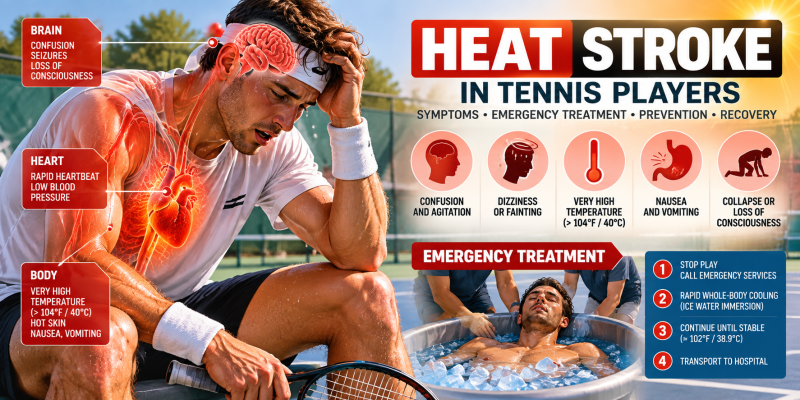
Heat stroke is one of the most dangerous heat-related emergencies a tennis player can experience. It occurs when the body can no longer regulate its temperature effectively, causing severe overheating and potentially life-threatening damage to the brain, heart, kidneys, and other organs.
For tennis players, the risk increases during long matches, intense baseline rallies, tournament play, and training sessions under direct sunlight. Hot and humid conditions make it harder for sweat to evaporate, reducing the body's ability to cool itself.
From a tennis sports medicine perspective, recognizing heat stroke early can save a player's life. If a player develops confusion, seizures, collapse, or altered consciousness during exercise in the heat, treat it as a medical emergency. Stop play, activate emergency medical services, and begin rapid whole-body cooling immediately.
Quick Overview: Heat Stroke in Tennis
-
Medical condition: A life-threatening heat-related emergency.
-
Common trigger: Intense physical exertion combined with environmental heat and humidity.
-
Warning signs: Confusion, collapse, unusual behavior, seizures, or loss of consciousness.
-
Temperature: Core body temperature is often around or above 104°F (40°C), but a lower reading does not rule out heat stroke.
-
Immediate response: Call emergency services and begin rapid cooling.
-
Prevention: Acclimatization, appropriate hydration, rest breaks, heat monitoring, and adjusting training intensity.
-
Return to tennis: Requires medical evaluation and a supervised, individualized recovery plan.
What Causes Heat Stroke in Tennis Players?
Tennis involves repeated sprints, rapid changes of direction, explosive serves, and prolonged rallies. These movements generate substantial metabolic heat. When the surrounding temperature and humidity are high, the body may struggle to release that heat quickly enough.
Several factors can contribute to exertional heat stroke.
1. High Temperatures and Humidity
Outdoor tennis courts can expose players to direct sunlight and radiant heat from court surfaces. High humidity further reduces sweat evaporation, making natural cooling less effective.
2. Prolonged Matches and Intense Training
Long matches, repeated tie-breaks, high-intensity drills, and insufficient recovery time increase heat production. Players may ignore early warning signs because they are focused on winning.
3. Dehydration
Inadequate fluid replacement can contribute to cardiovascular strain and heat illness. However, heat stroke can occur even in a player who has consumed fluids, so hydration alone cannot eliminate the risk.
4. Lack of Heat Acclimatization
Players who suddenly train or compete in hotter conditions may be more vulnerable. Gradually increasing exposure to heat over approximately 7–14 days can improve heat tolerance, although the appropriate schedule depends on the individual and environmental conditions.
5. Illness, Fatigue, and Certain Medications
Fever, recent illness, poor recovery, inadequate sleep, and some medications can increase the risk of heat-related illness. Players should ask a healthcare professional whether their medications affect sweating, hydration, or temperature regulation.
Heat Stroke Symptoms: Warning Signs Every Tennis Player Should Know
Heat stroke can develop rapidly. Coaches, teammates, tournament officials, and players should watch for changes in behavior as well as physical symptoms.
Neurological Symptoms
The most concerning warning signs include:
-
Confusion or disorientation.
-
Unusual behavior, irritability, or agitation.
-
Slurred speech or difficulty responding.
-
Loss of coordination or staggering.
-
Seizures.
-
Collapse or loss of consciousness.
Important: Altered mental status during exercise in hot conditions is a major warning sign. Do not assume that a confused or collapsing player is simply exhausted.
Physical Symptoms
Other possible symptoms include:
-
Extremely elevated body temperature.
-
Rapid heartbeat and breathing.
-
Headache or dizziness.
-
Nausea or vomiting.
-
Marked weakness.
-
Low blood pressure or collapse.
-
Hot, flushed skin.
A player with exertional heat stroke may still be sweating heavily. Dry skin is not required for the diagnosis.
Heat Exhaustion vs. Heat Stroke: What Is the Difference?
Heat exhaustion and heat stroke are different conditions, but heat exhaustion can progress to a more serious emergency.
Heat exhaustion may cause heavy sweating, weakness, thirst, headache, nausea, and dizziness. Mental function should remain intact. If symptoms are significant, stop exercise, move to a cool area, begin cooling, and seek medical assessment as needed.
Heat stroke is suspected when severe overheating is accompanied by neurological dysfunction, such as confusion, seizures, or loss of consciousness. It requires immediate emergency treatment.
If you cannot confidently distinguish the two conditions, prioritize safety and seek emergency medical assistance.
Emergency Treatment for Heat Stroke on the Tennis Court
The Golden Rule: Cool First, Transport Second
For suspected exertional heat stroke, rapid cooling is critical. Do not waste time waiting for a thermometer reading or attempting to make the player finish a game.
Step 1: Stop Play and Call Emergency Services
Immediately stop the match or training session. Call your local emergency number and explain that you suspect exertional heat stroke.
Move the player away from direct sunlight when possible. Remove excess clothing and equipment to improve cooling.
Step 2: Begin Rapid Whole-Body Cooling
Cold-water immersion is generally the preferred cooling method for exertional heat stroke when it can be performed safely.
-
Immerse the player's body in cold or ice water while keeping the head and airway safely supported.
-
Maintain continuous observation and appropriate airway support.
-
If immersion is unavailable, continuously douse the body with cold water and use fans, or apply frequently replaced cold, wet towels over as much of the body as possible.
-
Place cold packs around areas such as the neck, armpits, and groin as supplementary measures, not as a substitute for whole-body cooling.
Do not delay cooling while waiting for emergency responders or equipment.
Step 3: Monitor the Player
If the player is confused, unconscious, or having a seizure, do not give food, water, or oral medication. Never leave the person alone.
If the player is unconscious but breathing normally, protect the airway and follow the emergency dispatcher's instructions. If the person is not breathing normally, begin CPR and use an AED if available, following dispatcher guidance.
Step 4: Continue Cooling and Arrange Medical Care
Trained responders should monitor core temperature when appropriate and continue rapid cooling according to an established emergency protocol. A commonly used target is to stop active cooling as core temperature approaches approximately 38.9°C (102°F), avoiding excessive cooling.
Emergency medical evaluation is still necessary even if the player appears to recover. Heat stroke can cause delayed organ complications.
Never force a player with suspected heat stroke to walk off the court, drink large amounts of water, or return to play.
How Is Heat Stroke Diagnosed?
Heat stroke is a medical diagnosis based on the circumstances, symptoms, examination, and temperature assessment.
Core Temperature Measurement
In a clinical or trained sports medicine setting, rectal temperature is generally the preferred practical method for accurately measuring core temperature during exertional heat illness. Oral, forehead, ear, and armpit readings may underestimate the severity of overheating during exercise.
Do not delay treatment while trying to obtain a temperature measurement.
Medical Investigations
Hospital assessment may include blood tests, kidney and liver function tests, electrolyte measurements, muscle injury markers, and monitoring for complications. These tests help determine the severity of the illness and guide treatment.
Other conditions, including low blood sodium, low blood sugar, cardiac problems, and other causes of collapse, may need to be considered.
How to Prevent Heat Stroke During Tennis
Prevention requires more than drinking water. Players, coaches, and tournament organizers should combine environmental awareness, appropriate workload, cooling strategies, and symptom monitoring.
1. Acclimatize Gradually
Increase training duration and intensity progressively when adapting to hot weather. A structured acclimatization period of approximately 7–14 days is commonly used, with the exact progression adjusted to the player and conditions.
2. Follow a Practical Hydration Plan
-
Start training adequately hydrated.
-
Drink regularly during breaks rather than waiting until severe thirst develops.
-
Adjust fluid intake to individual sweat losses, session duration, and environmental conditions.
-
Consider electrolyte-containing drinks during prolonged or heavy-sweat sessions.
-
Avoid forcing excessive amounts of plain water, which can contribute to dangerously low blood sodium.
Hydration strategies should be individualized. More fluid is not always better.
3. Schedule Training Wisely
Whenever possible, schedule matches during cooler morning or evening periods. Monitor local heat and humidity advisories and follow tournament heat policies, including any prescribed rest breaks or suspension rules.
4. Use Shade and Cooling Breaks
During changeovers, use shaded areas and cooling towels. Cold drinks, cold-water towels, fans, and other suitable cooling methods can help manage thermal strain.
5. Wear Appropriate Tennis Clothing
Choose lightweight, breathable clothing and a suitable hat or visor when permitted. Clothing can improve comfort, but it cannot fully protect a player from extreme heat.
6. Monitor Symptoms and Training Load
Stop immediately if a player develops unusual weakness, worsening headache, dizziness, nausea, loss of coordination, or other concerning symptoms. Confusion, collapse, or seizures require emergency action.
Coaches should never pressure a player to continue because of the score, tournament ranking, or importance of the match.
Return to Tennis After Heat Stroke
A player should not return to competitive tennis immediately after heat stroke. Recovery must be guided by a qualified healthcare professional experienced in exertional heat illness or sports medicine.
Phase 1: Medical Assessment and Recovery
The player should receive medical evaluation and follow instructions regarding rest, follow-up testing, and monitoring for organ complications. There is no universal seven-day rest period that makes every player safe to exercise again.
Phase 2: Light Physical Activity
Once medically cleared, the player may begin short, low-intensity activity in a cool environment. The progression should be determined by symptoms, medical findings, and professional guidance.
Phase 3: Gradual Tennis-Specific Training
If recovery continues without symptoms, gradually introduce easy movement, controlled hitting, and short tennis drills. Increase duration and intensity step by step, rather than immediately returning to long baseline rallies or competitive match play.
Phase 4: Gradual Heat Reacclimatization
Outdoor training in hot weather should be reintroduced cautiously under professional guidance. Monitor symptoms, exercise tolerance, and recovery throughout the process.
Phase 5: Return to Competition
Full practice and tournament play should resume only after appropriate medical clearance and successful progression through the recovery plan.
Stop activity and seek medical advice if headache, dizziness, nausea, unusual fatigue, or other symptoms return. Confusion, collapse, or altered consciousness requires emergency care.
Frequently Asked Questions About Heat Stroke in Tennis
Can a tennis player get heat stroke even if they drink water?
Yes. Hydration helps manage fluid losses, but it does not prevent every case of heat stroke. High environmental heat, humidity, intense exercise, inadequate acclimatization, and individual health factors can still overwhelm the body's cooling mechanisms.
Can heat stroke happen without dry skin?
Yes. Players experiencing exertional heat stroke often continue to sweat heavily. Neurological symptoms and the overall clinical situation are more important than whether the skin is dry.
Should a player finish the match if they feel dizzy?
No. Stop playing immediately, move to a cooler area, and assess the symptoms. Persistent or severe symptoms require medical evaluation. Confusion, collapse, seizures, or altered consciousness should be treated as an emergency.
How long does it take to recover from heat stroke?
Recovery varies according to severity and complications. Some players recover relatively quickly, while others need a prolonged period of medical monitoring and rehabilitation. Return to tennis must be individualized rather than based on a fixed number of days.
Is it safe to play tennis in extreme heat?
It depends on the environmental conditions, the player's health, and the event's safety policies. Heat alerts, high humidity, inadequate cooling facilities, and insufficient recovery breaks may make playing unsafe. Follow official event guidance and be prepared to stop.
Final Advice From a Tennis Sports Medicine Perspective
Heat stroke is not ordinary tennis fatigue. It is a life-threatening emergency that can affect players of any age or competitive level.
The best protection is early recognition, gradual heat acclimatization, an individualized hydration strategy, sensible scheduling, cooling breaks, and a willingness to stop play when symptoms appear.
Remember the essential court-side principle: When heat stroke is suspected, call emergency services and begin rapid whole-body cooling immediately. Do not delay treatment to finish a match or wait for a temperature reading.
This educational guide does not replace professional medical evaluation. If you suspect heat stroke, treat it as an emergency.