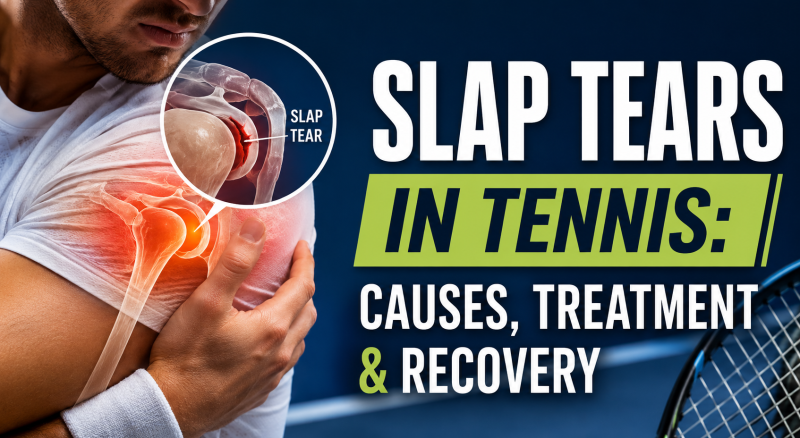
The tennis serve is one of the most explosive movements in sports, generating tremendous force through the shoulder. While a single powerful serve rarely causes injury, years of repetitive overhead motion can gradually damage the structures that stabilize the shoulder. One of the most challenging injuries affecting tennis players is a SLAP (Superior Labrum Anterior to Posterior) tear.
Across tennis clubs and competitive communities in the United States, orthopedic sports medicine specialists frequently diagnose SLAP tears in players who have spent years developing high-velocity serves. Unlike a simple muscle strain, a SLAP tear affects the shoulder's stabilizing cartilage and can significantly impact serving power, overhead shots, and overall performance. Recovery often requires months of rehabilitation, and some athletes ultimately need surgery to return to competitive tennis.
What Is a SLAP Tear?
The shoulder is the most mobile joint in the human body, allowing tennis players to produce explosive serves, overhead smashes, and high-speed forehands.
The shoulder socket is naturally shallow. Surrounding its edge is a ring of fibrocartilage known as the labrum, which serves several critical functions:
- Deepens the shoulder socket
- Improves joint stability
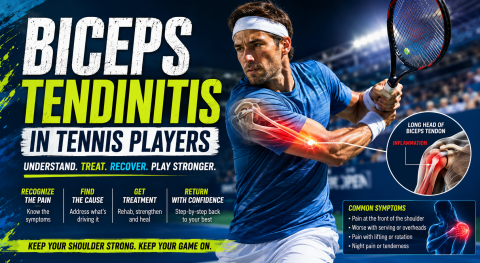
- Provides an attachment point for the long head of the biceps tendon
A SLAP tear occurs when the superior (top) portion of the labrum becomes detached from the shoulder socket. The injury extends from the front (anterior) to the back (posterior), giving rise to the name Superior Labrum Anterior to Posterior.
Why Tennis Players Develop SLAP Tears
The "Peel-Back" Mechanism
The tennis serve is among the fastest movements in athletics. During the late cocking phase of the serve, the shoulder reaches:
- Maximum abduction
- Extreme external rotation
- High rotational velocity
In this position, the long head of the biceps tendon twists aggressively. Rather than simply pulling downward, the tendon creates a rotational force that gradually peels the superior labrum away from the shoulder socket. Sports medicine experts refer to this as the peel-back mechanism.
A SLAP tear rarely develops from a single serve. Instead, thousands of repetitive serves over months or years slowly weaken the attachment until the labrum eventually tears.
Risk Factors
Several factors increase the likelihood of developing a SLAP tear, including:
- Years of competitive tennis
- High serving volume
- Poor shoulder flexibility
- Posterior capsule tightness
- Rotator cuff weakness
- Scapular muscle imbalance
- Previous shoulder injuries
- Improper serving mechanics
- Insufficient recovery between matches
Common Symptoms
Many tennis players ignore the early warning signs because symptoms often develop gradually.
Common symptoms include:
- Deep aching shoulder pain
- Pain at the front of the shoulder
- Pain during the trophy position
- Pain when making contact on a serve
- Clicking or popping sensations
- Catching within the shoulder
- Feeling that the shoulder is unstable
- Loss of serve velocity
- Weakness during overhead shots
- Fatigue after serving
Many athletes describe this condition as experiencing a "dead arm," where the shoulder suddenly loses its ability to generate normal power.
How Doctors Diagnose a SLAP Tear
Diagnosis begins with a detailed medical history and physical examination.
Medical History
Your orthopedic specialist may ask:
- When did the pain begin?
- Does serving make the pain worse?
- Do you hear clicking or popping?
- Have you noticed a decrease in serve speed?
Physical Examination
Special shoulder tests commonly include:
- O'Brien Test
- Crank Test
- Speed's Test
- Biceps Load Test
These examinations help identify injuries involving the superior labrum and the biceps anchor.
Imaging
Imaging studies may include:
- X-rays to rule out fractures or arthritis
- MRI
- MR Arthrogram
An MR Arthrogram is often considered the most accurate imaging test because the injected contrast helps visualize tears in the labrum more clearly.
Non-Surgical Treatment
Most orthopedic specialists recommend beginning with conservative treatment before considering surgery.
Treatment may include:
- Rest from overhead serving
- Ice therapy
- Anti-inflammatory medications (when appropriate)
- Physical therapy
- Rotator cuff strengthening
- Scapular stabilization exercises
- Stretching of the posterior capsule
- Core strengthening
- Gradual return to activity
Many recreational players recover successfully through structured rehabilitation alone.
Surgical Treatment Options
Arthroscopic SLAP Repair
During arthroscopic surgery, the surgeon inserts small anchors into the shoulder socket and uses high-strength sutures to reattach the torn labrum to the bone.
This procedure restores the shoulder's natural anatomy and is generally recommended for:
- Competitive athletes
- Younger players
- Individuals under approximately 30 years of age
- Patients with healthy, repairable labral tissue
Biceps Tenodesis
Biceps tenodesis has become an increasingly common treatment for many adult tennis players.
Instead of repairing the damaged superior labrum, the surgeon:
- Detaches the long head of the biceps tendon from its unstable attachment
- Reattaches it lower on the humerus (upper arm bone)
- Removes or smooths damaged labral tissue if necessary
By relocating the tendon, the procedure eliminates the peel-back stress responsible for ongoing irritation.
For recreational players and many athletes over age 30, biceps tenodesis often provides a more predictable recovery and a lower risk of postoperative shoulder stiffness compared with traditional SLAP repair.
Rehabilitation Timeline
Recovery requires patience and careful progression.
A typical rehabilitation program includes:
| Time After Surgery | Rehabilitation Goals |
|---|---|
| 0–6 weeks | Protect the repair and restore gentle motion |
| 6–12 weeks | Improve flexibility and begin strengthening |
| 3–4 months | Advanced strengthening and functional exercises |
| Around 4 months | Begin tennis-specific drills |
| 6–7 months | Return to overhead serves and competitive tennis if rehabilitation milestones are achieved |
Return-to-Tennis Criteria
Before returning to full competition, rehabilitation programs generally require:
Range of Motion
At least 90% pain-free shoulder mobility compared with the uninjured side.
Strength
Approximately 70%–90% rotator cuff and scapular strength, progressing toward near-symmetry with the healthy shoulder depending on the athlete's level of play.
Functional Progression
The player should successfully complete an interval tennis return program without pain or instability.
Interval Tennis Return Program
Returning to tennis is carefully structured to minimize stress on the healing shoulder.
Phase 1
Mini-tennis
- Short-court rallies
- Controlled strokes
- Light intensity
Phase 2
Baseline tennis
- Full groundstrokes
- Increasing rally speed
- Progressive intensity
Phase 3
Overhead progression
- Overhead smashes
- High serves
- Match-speed serving
- Competitive practice
Full-speed serving is intentionally delayed until the final stage to protect the healing shoulder.
Can Tennis Players Return to Their Previous Level?
Many athletes successfully return to recreational and competitive tennis after completing treatment and rehabilitation. Recovery depends on several factors, including age, tissue quality, the type of surgery performed, commitment to physical therapy, and gradual progression back to overhead activities. Returning to play too early can increase the risk of persistent pain, stiffness, or re-injury.
Preventing Future Shoulder Injuries
Tennis players can reduce their risk of future shoulder injuries by:
- Performing a proper warm-up before every match
- Strengthening the rotator cuff regularly
- Improving scapular stability
- Stretching the posterior shoulder capsule
- Monitoring serving volume
- Scheduling adequate recovery days
- Addressing shoulder pain early
- Maintaining proper serving mechanics with qualified coaching
Conclusion
A SLAP tear is one of the most significant shoulder injuries affecting tennis players. While the condition often develops gradually through years of repetitive serving, early diagnosis and appropriate treatment can help preserve shoulder function and extend a player's career. Whether managed through rehabilitation, arthroscopic SLAP repair, or biceps tenodesis, a carefully planned recovery program and a gradual return-to-play strategy provide the best opportunity for a safe and successful return to the court.