
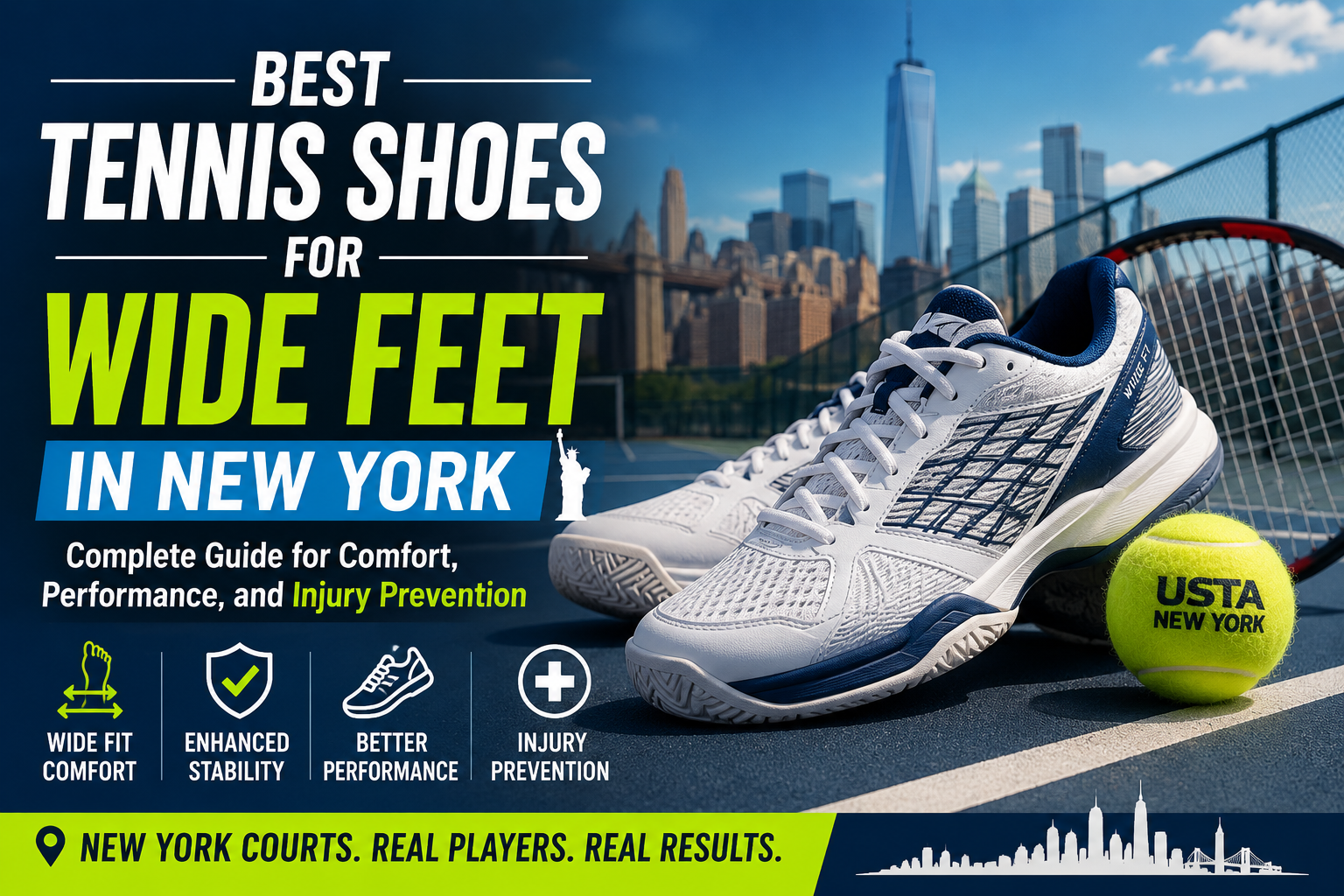
As a tennis coach working in the demanding hard-court environment of New York, I regularly see talented players whose performance is limited not by their technique, fitness, or strategy, but by their footwear. Whether you are competing at local USTA leagues, practicing at public courts in Manhattan, training indoors during winter, or preparing for tournaments throughout the state, your tennis shoes play a critical role in every movement you make.
For players with wide feet, finding the right tennis shoe is not simply a matter of comfort. It directly affects performance, endurance, balance, movement efficiency, and long-term injury prevention. Many players unknowingly wear shoes that are too narrow, leading to chronic discomfort, foot pain, and even serious biomechanical issues that can affect the knees, hips, and lower back.
New York presents unique challenges for tennis athletes. Most outdoor courts throughout the city and surrounding areas are hard courts that generate significant impact forces. Combined with long practice sessions and competitive matches, these conditions place tremendous stress on the feet.
This comprehensive guide examines the best tennis shoes for wide feet available in 2026, explains how to determine your ideal fit, discusses common foot conditions, and provides expert recommendations to help you maximize both comfort and performance.
Why Finding the Right Tennis Shoe Is Critical
Tennis is one of the most demanding sports for footwork. Unlike running, where movement is primarily forward, tennis requires players to move in multiple directions simultaneously.
Players regularly perform:
- Sudden stops
- Explosive starts
- Lateral slides
- Quick pivots
- Split steps
- Recovery movements
When a player's foot is wider than the shoe's platform, stability decreases dramatically.
Stability and Performance
A properly fitted tennis shoe allows the foot to remain centered over the midsole during aggressive movements.
When the shoe is too narrow:
- The foot spills over the edge of the midsole
- Balance becomes compromised
- Lateral movements become less efficient
- Energy transfer decreases
This reduction in stability often becomes noticeable during long rallies and defensive court coverage.
Injury Prevention
Poor shoe fit contributes to several common tennis injuries:
- Plantar fasciitis
- Achilles tendonitis
- Ankle sprains
- Shin splints
- Metatarsal stress injuries
- Knee pain
A wide-footed player squeezed into a standard-width shoe may experience excessive pressure throughout the forefoot, resulting in altered movement mechanics that place additional strain on joints and soft tissues.
The New York Hard-Court Challenge
Most recreational and competitive tennis in New York takes place on hard courts.
These surfaces provide:
- Consistent ball bounce
- Excellent traction
- Increased impact forces
Repeated impact over months and years can contribute to cumulative stress injuries if footwear lacks adequate cushioning and support.
For wide-footed players, proper fit becomes even more important because prolonged pressure points can develop into painful hot spots and chronic irritation.
Why Standard Tennis Shoes Fail Wide-Footed Players
Unlike casual athletic shoes, tennis shoes are engineered with rigid structures designed to stabilize the foot during aggressive side-to-side movement.
This stability comes at a cost.
Tennis shoes generally offer less flexibility and stretch than running shoes.
Toe Box Compression
Many performance-oriented tennis shoes feature narrow, tapered toe boxes.
When a wide forefoot is compressed:
- Toes cannot spread naturally
- Blood circulation may be reduced
- Numbness can occur
- Balance becomes less efficient
Players often mistake these symptoms for normal tennis discomfort.
In reality, they are signs of poor fit.
The Blister Problem
Blisters develop when friction repeatedly occurs between the foot and the shoe.
A shoe that is too narrow causes:
- Uneven pressure
- Increased rubbing
- Excessive moisture buildup
New York summers create ideal conditions for blister formation due to heat and humidity.
Long-Term Structural Issues
Sports podiatrists frequently observe chronic problems associated with poorly fitted footwear.
Potential complications include:
- Bunions
- Hammertoes
- Neuromas
- Chronic forefoot pain
These issues often develop gradually and may not become noticeable until significant damage has already occurred.
How to Determine If You Have Wide Feet
Choosing the correct width begins with accurate measurement.
Understanding Width Classifications
For Men:
- D = Standard Width
- 2E = Wide Width
- 4E = Extra Wide Width
For Women:
- B = Standard Width
- D = Wide Width
- 2E = Extra Wide Width
Measure While Standing
Feet expand under body weight.
For accurate measurements:
- Stand upright.
- Measure both feet.
- Wear tennis socks.
- Measure late in the day.
Most people have one foot slightly larger than the other.
Always fit shoes to the larger foot.
Tennis Shoes Versus Running Shoes
Many players assume their running shoe size automatically applies to tennis shoes.
This assumption often leads to problems.
Running shoes prioritize:
- Forward movement
- Cushioning
- Flexibility
Tennis shoes prioritize:
- Lateral stability
- Torsional rigidity
- Court traction
As a result, sizing can differ significantly.
Best Tennis Shoes for Wide Feet in 2026
After evaluating player feedback, durability testing, comfort ratings, and performance characteristics, these models stand out for wide-footed players.
1. New Balance Fresh Foam X CT-Rally
Overview
The Fresh Foam X CT-Rally continues to set the standard for wide-fit tennis footwear.
New Balance remains one of the few manufacturers that genuinely designs shoes around wider foot shapes rather than simply stretching standard models.
Key Features
- Fresh Foam X cushioning
- Wide platform design
- Reinforced lateral support
- Durable outsole
Pros
- Excellent comfort
- Available in multiple widths
- Outstanding shock absorption
- Ideal for hard courts
Cons
- Slightly heavier than speed-oriented models
Best For
- League players
- Frequent competitors
- Players with flat feet
2. K-Swiss Hypercourt Express 3
Overview
The Hypercourt Express 3 is known for immediate comfort and exceptional toe-box space.
Many players report little or no break-in period.
Key Features
- Lightweight construction
- Generous forefoot width
- Breathable upper
- Responsive cushioning
Pros
- Comfortable from day one
- Excellent ventilation
- Reduced pressure on bunions
Cons
- Moderate durability
Best For
- Recreational players
- Indoor court players
- Players seeking maximum comfort
3. ASICS Gel Resolution 9 Wide
Overview
The Gel Resolution line remains one of the most respected performance tennis shoes in the sport.
The Wide version specifically addresses the needs of players requiring additional forefoot room.
Key Features
- GEL cushioning technology
- DYNAWALL stability system
- Durable AHAR outsole
- Excellent lockdown
Pros
- Exceptional lateral support
- Tournament-ready performance
- Durable construction
Cons
- Requires short break-in period
Best For
- Aggressive baseliners
- Competitive players
- Advanced athletes
4. Babolat SFX 4
Overview
Designed specifically for comfort-focused players, the SFX 4 provides one of the most accommodating fits available.
Key Features
- Extra-wide forefoot
- Plush cushioning
- Michelin outsole
Pros
- Outstanding comfort
- Excellent shock absorption
- Great for sensitive feet
Cons
- Less responsive than performance-focused shoes
Best For
- Seniors
- Recreational players
- Players with chronic foot discomfort
Best Tennis Shoes by Court Surface
Hard Courts
Hard courts dominate New York tennis.
Recommended options:
- New Balance Fresh Foam X CT-Rally
- ASICS Gel Resolution 9 Wide
These models provide superior durability and cushioning.
Clay Courts
Clay requires specialized traction patterns.
Look for:
- Full herringbone tread
- Controlled sliding capability
- Consistent grip
Indoor Courts
Indoor surfaces produce less outsole wear.
Recommended options:
- K-Swiss Hypercourt Express 3
- Lightweight performance models
Indoor players benefit from reduced shoe weight and enhanced agility.
Best Tennis Shoes for Specific Foot Conditions
Flat Feet
Recommended:
- New Balance CT-Rally
- Stability-focused models
These shoes provide improved arch support and midfoot control.
High Arches
Recommended:
- ASICS Gel Resolution 9 Wide
The enhanced cushioning helps absorb impact forces.
Plantar Fasciitis
Recommended:
- New Balance CT-Rally
- Babolat SFX 4
Additional cushioning can reduce stress on the plantar fascia.
Bunions
Recommended:
- K-Swiss Hypercourt Express 3
- Babolat SFX 4
These models offer wider toe boxes and reduced pressure points.
Wide Forefoot and Narrow Heel
Look for shoes that combine:
- Spacious forefoot design
- Secure heel counter
- Adjustable lacing systems
Where to Buy Tennis Shoes in New York
Players can purchase tennis shoes through major retailers and specialty tennis stores.
Benefits of shopping in person include:
- Professional fitting
- Immediate comfort assessment
- Width verification
- Return policy clarification
When possible, test shoes during the evening when feet are naturally larger.
Tennis Shoe Buying Tips From a Coach
Wear Tennis Socks During Fitting
Never evaluate shoes while wearing thin casual socks.
Tennis socks occupy additional volume and affect fit significantly.
Follow the Thumb Rule
Allow approximately one thumb width between the longest toe and the front of the shoe.
Test Lateral Movement
Before purchasing:
- Side shuffle
- Perform split-step motions
- Simulate recovery movements
Your foot should remain stable.
Replace Shoes Regularly
Competitive players should evaluate replacement after approximately 50 to 70 hours of play.
Signs of replacement include:
- Reduced cushioning
- Outsole wear
- New aches and pains
Injury Prevention Through Proper Footwear
The correct tennis shoe acts as your first line of defense against injury.
Benefits include:
- Improved shock absorption
- Better stability
- Reduced fatigue
- Enhanced balance
- Lower injury risk
Players who invest in properly fitted wide-width tennis shoes often report immediate improvements in comfort and confidence.
Frequently Asked Questions
What is the widest tennis shoe available?
New Balance consistently offers some of the widest tennis shoes, including 2E and 4E options.
Should tennis shoes be one size larger?
Not necessarily. Proper width is often more important than increasing length.
Are running shoes suitable for tennis?
No. Running shoes lack the lateral support required for tennis movements.
How often should tennis shoes be replaced?
Active players typically replace shoes every six months or sooner.
Can wide feet increase injury risk?
Yes. Poorly fitted footwear can alter movement patterns and increase injury potential.
Are expensive tennis shoes worth it?
For frequent players, premium shoes often provide superior support, durability, and protection.
Can orthotics be used with tennis shoes?
Yes. Many wide-width models accommodate custom orthotics effectively.
What causes foot numbness during tennis?
Numbness often indicates excessive compression from shoes that are too narrow.
Should juniors wear wide-width shoes?
If their feet require additional space, absolutely. Proper fit is critical during growth years.
Do tennis shoes stretch over time?
Only minimally. Tennis shoes should fit correctly from the beginning.
Conclusion
Your feet are the foundation of every shot, sprint, and recovery step on the tennis court. For wide-footed players in New York, selecting the proper tennis shoe is not merely a comfort decision—it is a performance investment and an injury-prevention strategy.
The New Balance Fresh Foam X CT-Rally remains the leading choice for overall comfort and support. The K-Swiss Hypercourt Express 3 delivers exceptional immediate comfort, while the ASICS Gel Resolution 9 Wide offers elite-level stability for competitive athletes. Players prioritizing cushioning and foot protection should strongly consider the Babolat SFX 4.
By understanding your foot shape, choosing dedicated wide-width models, and matching your footwear to your playing style and court surface, you can move more efficiently, play longer, and significantly reduce your risk of injury.
The right tennis shoe can make the difference between merely surviving a match and performing at your highest level from the first point to the final set.