
Sometimes Defeat Is the Fastest Path to Growth
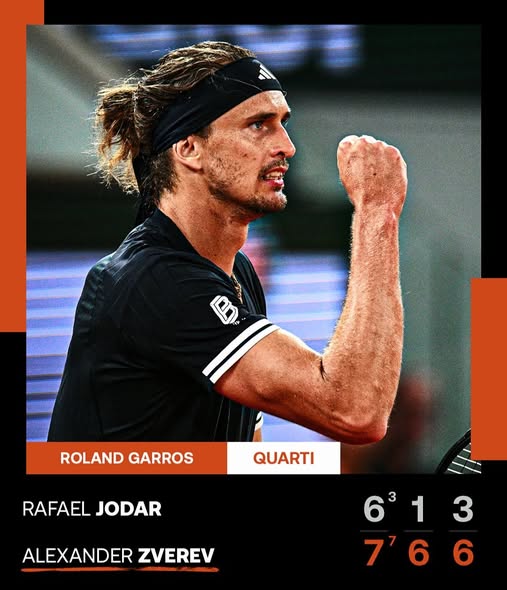
At Roland Garros 2026, young Spanish prospect Rafael Jodar faced one of the toughest challenges in professional tennis: competing against Alexander Zverev on one of the sport's biggest stages.
The scoreboard showed Zverev advancing in straight sets, 7-6(3), 6-1, 6-3, but numbers alone do not tell the full story.
For experienced tennis observers, this quarterfinal was less about the result and more about development.
Jodar entered the match as an emerging talent still learning how to navigate elite-level tennis. Zverev entered as a proven Grand Slam contender with years of experience handling pressure, expectations, and physically demanding matches.
While Zverev earned the victory, Jodar gained something equally important:
Experience.
Future champions are not built solely through victories. They are built through difficult matches against players who expose weaknesses, challenge mental toughness, and reveal the next areas requiring improvement.
For Rafael Jodar, Roland Garros 2026 may ultimately become one of the most valuable learning experiences of his young career.
Understanding the Difference Between Talent and Experience
Many tennis fans focus only on rankings.
However, the gap between a promising talent and a future world No. 1 is often measured in experience rather than ability.
Jodar possesses many of the physical tools necessary for elite tennis:
- Athletic movement
- Competitive spirit
- Strong baseline game
- Natural shot-making ability
- Court intelligence
But playing against a veteran like Alexander Zverev reveals another level entirely.
Experienced players understand:
- Momentum management
- Emotional control
- Tactical discipline
- Energy conservation
- Pressure-point execution
These qualities often decide matches even when talent levels appear similar.
This quarterfinal demonstrated exactly why experience remains one of the most powerful weapons in professional tennis.
First Set Analysis: Jodar Showed He Belongs
The opening set was the strongest evidence that Jodar's future is bright.
The young Spaniard competed aggressively and confidently against one of the world's best players.
The set reached a tiebreak because:
- Jodar protected his serve effectively
- He matched Zverev's baseline consistency
- He remained mentally engaged
- He trusted his natural game
Many young players become overwhelmed when facing established stars.
Jodar did not.
Instead, he showed courage.
That courage allowed him to remain competitive throughout the opening stages.
What Happened in the Tiebreak?
The tiebreak represented the first major lesson of the day.
Elite players understand that tiebreaks are not simply mini-sets.
They are moments where:
- Focus must increase
- Shot selection becomes critical
- Emotional control becomes essential
Zverev's experience became visible.
He managed the key points better.
He remained calm.
He executed under pressure.
Jodar competed well but learned an important reality:
At the highest level, a few points can determine an entire match.
How the Match Shifted After the First Set
Losing a close first set can create emotional challenges.
Young players often invest enormous energy into competing with elite opponents.
When they lose that set despite playing well, frustration can appear.
That frustration can lead to:
- Reduced focus
- Slight tactical errors
- Lower first-serve percentages
- Increased risk-taking
The second set reflected this dynamic.
Zverev sensed the opportunity and immediately increased pressure.
Alexander Zverev's Masterclass in Professional Tennis
One reason Zverev remains among the world's elite players is his ability to identify vulnerabilities.
After winning the first set, he adjusted quickly.
He began:
- Serving more aggressively
- Dictating baseline exchanges
- Extending pressure during return games
- Taking away time from Jodar
These adjustments forced the Spaniard into uncomfortable positions.
Experienced players recognize these moments immediately.
Zverev did exactly that.
Strengths Rafael Jodar Displayed
Despite the loss, numerous positives emerged.
Competitive Courage
The first strength was courage.
Many young players become passive against elite opponents.
Jodar continued attacking.
He trusted his game.
That mindset is essential for future success.
Movement
His movement remained impressive.
Throughout the match he demonstrated:
- Quick recovery steps
- Effective sliding on clay
- Strong court coverage
Movement often separates future champions from ordinary players.
Jodar showed promising signs.
Shot Tolerance
Long rallies did not intimidate him.
He demonstrated patience from the baseline and a willingness to construct points.
This quality is particularly valuable on clay courts.
Athletic Endurance
Although the match became difficult, his physical tools remain evident.
The foundation for future endurance already exists.
Professional conditioning can elevate this strength even further.
Areas for Improvement
Every developmental match reveals opportunities.
Serve Development
To challenge Top 10 players consistently, Jodar must continue improving:
- First-serve speed
- Placement
- Variety
Free points become increasingly important at elite levels.
Pressure Point Execution
Important points require special attention.
Future growth will involve:
- Better point construction
- Smarter risk management
- Greater confidence under pressure
Match Momentum Awareness
One of the biggest lessons from Zverev involved momentum.
Elite players recognize momentum shifts instantly.
Developing this awareness will help Jodar compete more effectively against top opponents.
Mental Game Analysis
Mental development remains one of the most important components of reaching world No. 1.
Talent opens the door.
Mental strength keeps it open.
What Jodar Learned
This match likely taught several important lessons:
Every Point Matters
Champions understand that small moments decide major matches.
The tiebreak illustrated this perfectly.
Emotional Stability Is Essential
After difficult points, quick recovery becomes critical.
Future champions cannot allow disappointment to influence the next point.
Belief Must Remain Constant
Even when trailing, elite players continue believing.
Maintaining conviction throughout a match remains an important developmental goal.
The Future World No. 1 Pathway
Many fans dream about seeing Rafael Jodar eventually reach the top ranking.
That possibility depends on continuous development.
Future No. 1 players typically master five areas:
Technical Excellence
Improving:
- Serve
- Return
- Net play
- Transitional shots
Tactical Flexibility
Learning multiple game plans.
Future champions can win:
- Aggressively
- Defensively
- Through adaptation
Physical Conditioning
The modern game demands elite fitness.
Top players often spend several hours daily improving:
- Strength
- Endurance
- Mobility
- Recovery
Mental Toughness
Championship tennis is often psychological.
Future No. 1 players learn to:
- Stay calm
- Manage expectations
- Handle adversity
- Embrace pressure
Match Experience
There is no shortcut.
Experience comes from:
- Playing elite opponents
- Competing in major tournaments
- Learning from defeats
Jodar is currently in this phase.
And that is completely normal.
Breathing and Stamina Management
One of the most overlooked aspects of professional tennis is breathing.
Elite players carefully regulate breathing patterns throughout matches.
Why Breathing Matters
Proper breathing helps:
- Lower heart rate
- Improve focus
- Increase oxygen delivery
- Enhance recovery between points
Zverev's Example
Throughout the match, Zverev appeared composed.
His breathing rhythm remained controlled.
This allowed him to:
- Recover faster
- Maintain concentration
- Execute under pressure
Jodar's Development Opportunity
As experience grows, Jodar can improve:
Between-Point Recovery
Taking deeper breaths after long rallies.
Emotional Reset Breathing
Using controlled breathing after errors.
Pressure Management
Reducing tension before important serves and returns.
These small adjustments often produce significant results.
Focus and Concentration
Elite tennis requires maintaining attention for hours.
Against players like Zverev, even brief lapses become expensive.
Maintaining Focus
Future improvements may include:
One Point at a Time Thinking
Avoiding scoreboard distractions.
Consistent Routines
Repeating the same preparation before every point.
Emotional Neutrality
Not becoming overly excited or discouraged.
These habits help create consistency.
Tactical Adjustments for Future Meetings
If Jodar faces Zverev again, several adjustments could help.
More Aggressive Returning
Applying pressure earlier in return games.
Shorter Points
Reducing energy expenditure by attacking opportunities sooner.
Greater Court Positioning Variety
Mixing:
- Deep positions
- Aggressive positions
- Transitional positioning
This can disrupt rhythm.
Improved Serve Patterns
Keeping opponents guessing.
Predictability becomes dangerous against elite players.
The Importance of Patience
Many future stars experience difficult losses before reaching greatness.
Consider how legends developed:
They lost.
They learned.
They improved.
Then they returned stronger.
This process is normal.
The journey to the top ranking rarely happens overnight.
Why This Match May Be More Valuable Than a Routine Victory
Victories build confidence.
Defeats build understanding.
This quarterfinal provided Jodar with exposure to:
- Grand Slam pressure
- Elite tactical execution
- Championship-level focus
- Physical demands of top-tier tennis
Those lessons cannot be learned in practice.
They must be experienced firsthand.
ATP Expert Perspective
Many ATP analysts would likely view this result positively despite the loss.
The reasons are clear:
- Jodar competed fearlessly early
- He gained experience against a world-class opponent
- He identified areas requiring improvement
- He reached a major stage of a Grand Slam
Development is rarely linear.
This tournament represents progress.
Long-Term Outlook
The future remains extremely promising.
Jodar possesses:
- Talent
- Athleticism
- Competitive instincts
- Work ethic
Those qualities cannot be taught.
Experience, however, must be earned.
Every match against elite players accelerates development.
What Champions Do After Defeats
The greatest players respond to losses by asking:
- What did I learn?
- What can I improve?
- How do I return stronger?
They do not focus solely on disappointment.
They focus on growth.
This mindset transforms setbacks into opportunities.
Final Thoughts
Alexander Zverev won the quarterfinal.
But Rafael Jodar gained something that may prove invaluable in the years ahead.
He gained experience.
He learned how a proven contender manages pressure.
He discovered areas requiring improvement.
He experienced the intensity of elite-level Grand Slam tennis.
Most importantly, he left Paris with knowledge that cannot be taught in training sessions.
The road toward a future world No. 1 ranking is not built exclusively on trophies.
It is built on lessons.
Roland Garros 2026 provided Rafael Jodar with one of the biggest lessons of his young career.
Today, he remains in learning mode.
Tomorrow, those lessons may become the foundation of championships.
The result belongs to Alexander Zverev.
The experience belongs to Rafael Jodar.
And for a young player with enormous potential, that experience could become one of the most important investments in his journey toward the top of the tennis world.