
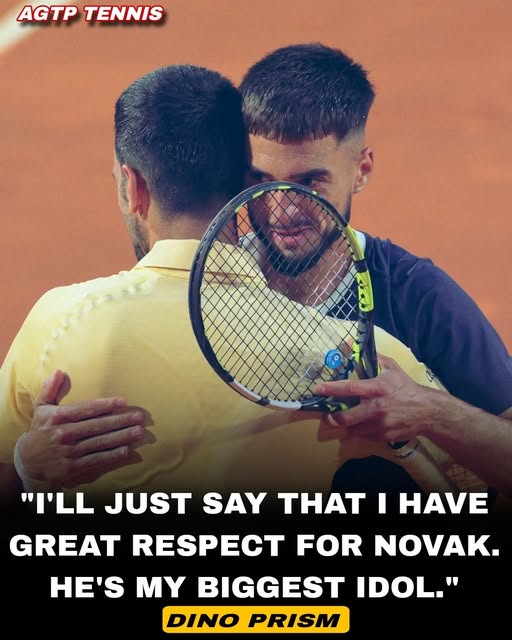
Novak Djokovic has defeated almost every challenge tennis could possibly create.
He conquered:
- rival dynasties
- hostile crowdz
- five-set marathons
- injuries
- pressure moments
- history itself
For nearly two decades, Djokovic stood as one of the greatest physical and mental warriors the sport has ever seen. Many younger players entered tournaments already mentally defeated before even stepping onto the court against him.
But now something different is happening across the ATP Tour.
The younger generation is no longer afraid.
They are stronger physically.
Faster laterally.
More explosive in recovery.
More fearless under pressure.
And perhaps for the first time in many years, the tennis world is beginning to openly ask a difficult question:
How much longer can Djokovic continue fighting against time itself?
The Brutal Reality of Modern Tennis
Professional tennis today is more physical than ever before.
Years ago, players could survive using experience alone for longer periods. Modern tennis has changed completely.
Today’s ATP stars train with:
- advanced recovery systems
- elite sports science
- explosive movement programs
- modern nutrition plans
- high-speed endurance conditioning
The younger generation grew up inside a faster version of tennis.
Players like:
- Carlos Alcaraz
- Jannik Sinner
- Holger Rune
- Ben Shelton
are not simply talented.
They are built for relentless pace.
They sprint for every ball.
They attack second serves aggressively.
They recover instantly after sliding.
They can maintain explosive intensity for hours.
This is the environment Djokovic now faces at age 39.
And even for a legend, the body eventually begins losing small percentages.
In elite tennis, small percentages become enormous differences.
Djokovic’s Greatest Weapon Was Always His Body
Many people remember Djokovic for:
- flexibility
- defense
- return of serve
- mental toughness
But underneath everything, his true superpower was durability.
For years he could:
- slide into impossible positions
- recover after 30-shot rallies
- change direction without injury
- outlast younger opponents physically
That level of elasticity made him terrifying.
His body moved almost like liquid.
Even when stretched far outside the court, he somehow returned balls that looked impossible to reach.
But aging changes recovery.
Not suddenly.
Slowly.
The body starts speaking through:
- heavier legs
- slower recovery mornings
- longer injury management
- reduced flexibility
- fatigue accumulation
The mind still believes.
The body begins negotiating.
That is the hidden war aging athletes face.
The Younger Generation Smells Opportunity
For nearly 15 years, younger players respected Djokovic almost too much.
Many entered matches nervously.
Now the energy has changed.
The new generation attacks him early:
- taking the ball earlier
- shortening rallies
- forcing physical movement
- increasing point speed
Younger players know something important:
If they can extend the physical intensity long enough, even Djokovic eventually shows signs of wear.
That reality would have sounded impossible during his prime years.
Now it is visible.
The Losses Are Starting to Feel Different
Every legend loses eventually.
But recently Djokovic’s defeats feel different emotionally.
Earlier in his career:
- losses were temporary
- adjustments came quickly
- rebounds were immediate
Now the recovery process appears harder.
Some matches reveal:
- frustration
- physical exhaustion
- slower movement recovery
- shortened explosive bursts
This does not mean Djokovic suddenly became weak.
Far from it.
Even at this stage, he remains one of the most intelligent players ever to hold a racquet.
But tennis is merciless against aging.
Especially modern tennis.
Why the Body Suffers More After 35
The human body naturally changes with age.
Recovery becomes slower because:
- muscle repair takes longer
- joints absorb more stress
- inflammation increases easier
- explosive movement declines gradually
Tennis multiplies those pressures.
A professional player may:
- sprint thousands of meters weekly
- rotate violently during serves
- slide repeatedly on clay
- absorb constant knee and hip pressure
Doing this at age 24 is different from doing it at 39.
Even perfect fitness cannot fully stop biological aging.
Djokovic delayed it longer than almost anyone in history.
But nobody escapes it forever.
The Danger of Playing Too Long
Many former champions stayed too long.
Sometimes pride keeps legends fighting beyond the body’s safest limit.
Fans still cheer.
Sponsors still celebrate.
Crowds still fill stadiums.
But internally, the body absorbs punishment silently.
If Djokovic continues another five years, many analysts believe the injury risk becomes extremely dangerous.
Not because he lacks discipline.
But because elite tennis punishes accumulated mileage.
The risks become:
- chronic knee injuries
- hip degeneration
- shoulder overuse
- muscle tears
- back complications
Aging athletes often experience one major injury that changes everything permanently.
That is why many sports scientists believe timing the exit correctly is extremely important.
Retirement Is Not Weakness
Some fans misunderstand retirement.
Leaving the sport does not erase greatness.
In fact, knowing when to stop can become part of greatness itself.
There is wisdom in understanding:
- the body’s limits
- long-term health
- recovery reality
- personal quality of life
Legends do not become smaller because they age.
Time simply moves forward.
Every champion eventually reaches the same mountain edge.
Even:
- Roger Federer
- Rafael Nadal
- Andy Murray
all eventually faced physical decline.
Not because they lacked heart.
Because human bodies cannot fight high-performance sport forever.
Djokovic’s Mind Still Believes
One reason Djokovic remains dangerous is mental power.
His competitive fire still burns stronger than many younger players.
During pressure moments he still:
- reads patterns brilliantly
- controls emotions better
- anticipates movement
- uses tactical intelligence
That experience keeps him elite even while physical tools decline slightly.
But modern ATP tennis increasingly rewards explosiveness.
Younger players recover faster between points and tournaments.
That creates a difficult equation for aging champions.
The Rise of Alcaraz and Sinner Changed Everything
The arrival of Carlos Alcaraz and Jannik Sinner accelerated the generational shift dramatically.
These players combine:
- speed
- power
- flexibility
- confidence
- fearless aggression
Most importantly, they grew up studying Djokovic.
They understand his patterns.
They know where to attack:
- shorter forehands
- wider movement zones
- extended physical exchanges
The new generation learned directly from the Big Three era.
Now they are applying those lessons against the legends themselves.
Time to Rise, Time to Fall
Sports history repeats this cycle forever.
Every era eventually changes.
One generation rises.
Another slowly fades.
This is not tragedy.
It is the natural rhythm of competition.
Years ago Djokovic himself became the young challenger trying to defeat older champions.
Now younger stars aim to replace him.
That cycle never stops.
The difficult part is emotional.
Fans struggle accepting that their heroes are aging.
But greatness is not measured only by dominance.
It is also measured by how a champion handles decline.
Djokovic’s Legacy Is Already Untouchable
Whether Djokovic retires next year or in three years, his legacy is secure forever.
He already achieved:
- Grand Slam history
- world No. 1 records
- unmatched consistency
- legendary rivalries
- incredible mental performances
Nothing can erase those accomplishments.
Even if losses increase now, history will remember the peak version of Djokovic:
- impossible defense
- iron mentality
- endless endurance
- brutal precision
That version changed tennis forever.
Why Retirement Within 2 to 3 Years Feels Realistic
Many analysts quietly believe Djokovic may retire within the next two to three years.
Several reasons support this possibility:
- rising injury risk
- increased physical demand
- younger competition improving rapidly
- recovery becoming harder
- emotional fatigue from constant travel
At some point, the body begins asking for peace.
Champions often ignore those signals temporarily.
Eventually the signals become louder.
Aging athletes frequently describe feeling:
- mentally tired
- physically sore daily
- slower after matches
- emotionally drained by recovery routines
The public sees only the match.
Players live the recovery.
The Emotional Side Nobody Sees
Leaving tennis is emotionally painful for legends.
The sport becomes identity.
For decades Djokovic lived through:
- tournaments
- rankings
- training blocks
- rivalries
- championships
Walking away means entering a completely different life.
That transition scares many athletes.
Especially competitors who spent their whole lives chasing victory.
But eventually every athlete must answer the same question:
Is continuing worth the physical price?
The Injury Fear Is Becoming Bigger
The biggest concern now may not even be rankings.
It may be injury prevention.
If Djokovic continues too long while the body weakens, one serious injury could impact life beyond tennis.
That changes the conversation completely.
Retirement then becomes not about quitting.
It becomes protection.
Protecting:
- mobility
- long-term healthe
- future family life
- quality of aging
Many retired athletes later admit they wished they rested earlier.
Professional sport sometimes teaches people to ignore pain too long.
Tennis Has Become More Violent Physically
Modern rallies are explosive.
Players today hit:
- harder forehands
- heavier topspinne
- faster directional changes
- more aggressive returns
The physical load per point increased enormously.
Even the recovery between tournaments is shorter psychologically because the calendar remains intense.
For older players, that schedule becomes brutal.
Travel alone creates fatigue:
- flights
- time zones
- sleep disruption
- constant adaptation
Doing this at nearly 40 years old is extraordinary.
Fans Must Appreciate the Final Years
Instead of only focusing on decline, tennis fans should appreciate the final chapters.
Watching Djokovic compete now is watching history live.
Every remaining tournament could become:
- a farewell memory
- a final rivalry chapter
- one more legendary moment
Sports legends disappear faster than fans expect.
One season suddenly becomes the last.
That is why many fans now watch Djokovic with mixed emotions:
- admiration
- sadness
- gratitude
The Legend Will Fall — But Legends Never Truly Disappear
Eventually the younger generation will fully take control.
That moment is unavoidable.
The rankings will change.
The trophies will move elsewhere.
The crowds will celebrate new stars.
But legends never truly disappear from tennis history.
Young players today still study:
- Federer footwork
- Nadal intensity
- Djokovic defense
Future generations will continue learning from them too.
Their influence survives beyond retirement.
Final Analysis: Djokovic Is Fighting Time More Than Opponents Now
At this stage of his career, Djokovic’s greatest opponent may no longer be the player across the net.
It may be time itself.
The younger generation possesses:
- fresher legs
- greater recovery speed
- explosive movement
- fearless mentality
Meanwhile Djokovic carries:
- thousands of professional matches
- years of physical mileage
- accumulated injuries
- emotional exhaustion
That battle becomes harder every season.
Still, what he accomplished remains almost superhuman.
If retirement comes within the next two or three years, it will not mean failure.
It will mean the human body finally requested rest after one of the greatest careers tennis has ever witnessed.
Because in sports, there is:
- a time to rise
- a time to dominate
- and eventually, a time to let the next generation take the stage
And perhaps tennis is slowly approaching that final chapter for Novak Djokovic