
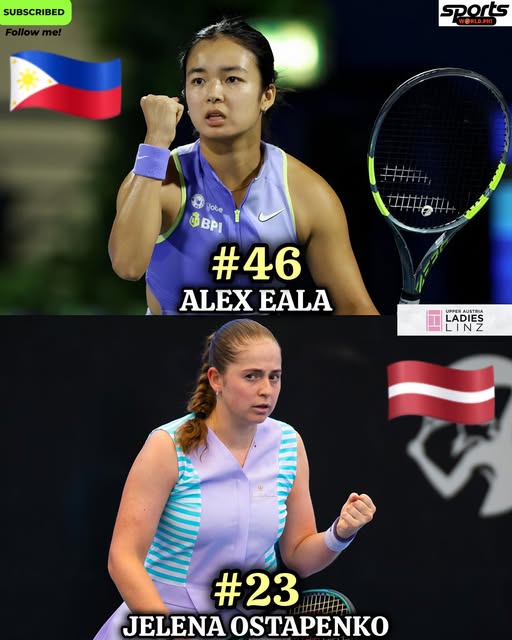
The second round of the Upper Austria Ladies Linz set up a fascinating David vs. Goliath narrative: the unseeded World No. 46, Alex Eala, stepping up to face the powerful World No. 23 and fourth seed, Jelena Ostapenko. On paper, the odds were stacked against Eala, with Ostapenko entering as a heavy favorite (often listed at -160 odds), but the Filipina star came armed with a secret weapon: a 2–0 head-to-head record.
However, those two previous wins came with crucial caveats. Their first meeting at the Miami Open was a hard-fought battle on hard courts (7-6, 7-5). Their second encounter, at Eastbourne, ended in a walkover after Ostapenko retired with an injury while trailing (0-6, 6-2, 3-2). This time, the dynamic was entirely different. For the first time, the two were set to clash on clay, the very surface where Ostapenko won her 2017 French Open title and boasts a formidable 62.5% career win rate. The question on everyone's mind was not just if Eala could win, but how.
Statistical Breakdown: Surviving the Storm
Eala's path to victory was not a straightforward demolition but a masterclass in survival and clutch performance.
The key statistical battleground was the break points. Eala faced a staggering 10 break points during the match but saved 9 of them, showcasing incredible composure under pressure. This defensive resilience was the bedrock of her win. On the other side of the net, Ostapenko's aggressive game, known for its high-risk, high-reward style, generated a significant 48.3% break-point conversion rate on the season, but on this night, Eala's defense proved impenetrable at critical moments.
While Eala served zero aces compared to Grabher's three in the first round, her defensive grit was the true headline. In her opening match, she demonstrated this exact tenacity, saving 9 of 10 breakpoints against hometown player Julia Grabher, winning 64% of her service points and 40% of return points, a solid foundation for the battle ahead.
Tactical Analysis: How Eala Won
Facing a former Grand Slam champion with a significant power advantage on her preferred surface required a flawless tactical approach. Here’s how Eala likely executed her game plan to secure the upset.
1. Neutralizing the Ostapenko Bomb
Ostapenko's game is built on dictating play with explosive groundstrokes. Eala's primary objective would have been to disrupt that rhythm. Instead of trying to trade power for power, she used deep, looping shots to push Ostapenko behind the baseline. By taking away the Latvian's ability to step inside the court and take the ball early, Eala forced her into uncomfortable, low-percentage shots and uncharacteristic errors.
2. Attacking the Second Serve
One of the most effective strategies against a power hitter is to pressure their service games. Eala likely targeted Ostapenko’s second serve, stepping into the court to take it early and redirect the ball. This aggressive returning not only earned her crucial points but also piled mental pressure on Ostapenko, forcing her to think twice about her serve placement.
3. Unshakeable Mental Fortitude
Perhaps Eala's greatest weapon was her mental strength. Saving 9 of 10 break points is not just a statistic; it's a testament to an unwavering belief. Every time Ostapenko had a look at a break, Eala raised her level, hitting brave shots and making her opponent play one more ball. This resilience can be psychologically devastating, forcing the higher-ranked player to doubt their ability to close out big points.
4. Winning the Long Rallies
Eala’s consistency and speed around the court were key. By extending rallies, she was able to turn defense into offense. As her opponent grew frustrated, Eala patiently waited for a short ball to attack, converting her own break-point opportunities (3 of 7 against Grabher) at a crucial 43% clip. This blend of patience and precision was the perfect foil to Ostapenko's raw firepower.
Final Summary: A Blueprint for the Upset
In the end, Alex Eala's victory was a triumph of tactical intelligence and mental grit over raw power. She didn't try to beat Jelena Ostapenko at her own game. Instead, she constructed a perfect game plan: absorb the power, target the second serve, and stand firm under pressure.
By imposing her own style of play—one built on defensive resilience, strategic depth, and unwavering composure—Eala turned what was supposed to be a clay-court coronation for the 2017 French Open champion into another signature win of her young career. This analysis isn't just about how she won; it's a blueprint for any underdog looking to upset a giant: know your opponent's strengths, believe in your own, and never, ever back down.