
The Rivalry Is Changing
Tennis rivalries are often built on adjustments. One player wins early, the other studies the loss, develops solutions, and eventually turns the matchup around. The evolving rivalry between Linda Nosková and Alexandra Eala is becoming a perfect example of this process.
Their head-to-head record tells a fascinating story:
- 2020 French Open Juniors Quarterfinals – Eala defeated Nosková.
- 2026 Indian Wells Round of 16 – Nosková defeated Eala decisively.
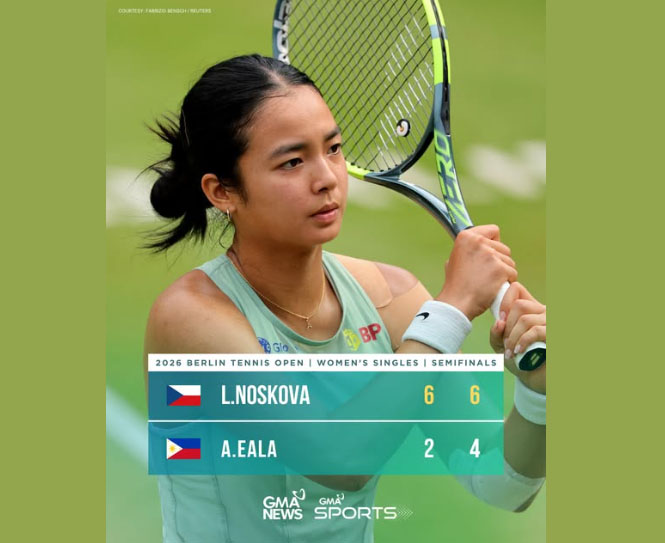
- 2026 Berlin Open Semifinals – Nosková defeated Eala 6-2, 6-4 in 69 minutes.
At the junior level, Eala found answers. At the professional level in 2026, Nosková appears to have discovered a blueprint.
The Berlin semifinal was particularly revealing. It was not simply a case of one player hitting harder than the other. It was a match of tactical precision, court positioning, controlled aggression, and relentless pressure.
Nosková identified several areas where Eala could be exposed, and she attacked those areas repeatedly from the first point until the final handshake.
Alexandra Eala's Journey to the Semifinal
Before discussing the loss, it is important to understand what Eala accomplished.
Reaching the semifinals of a WTA-level grass event is a major achievement.
Throughout the tournament, Eala demonstrated:
- Excellent court intelligence
- Creative shot selection
- Strong movement
- Competitive resilience
- Improved confidence against higher-ranked opponents
Her left-handed game continued to create problems for opponents.
The lefty serve naturally drags players off the court.
Her forehand creates unusual angles.
Her ability to redirect pace often forces mistakes.
These qualities helped Eala reach the latter stages of the tournament.
However, against Nosková, she encountered a player whose strengths directly challenged her preferred patterns.
Linda Nosková's Game Plan Was Clear
From the opening games, Nosková appeared determined to play first-strike tennis.
She did not want long rallies.
She did not want Eala constructing points.
She wanted immediate control.
The Czech star focused on:
- Taking the ball early.
- Attacking Eala's second serve.
- Pressuring Eala's backhand wing.
- Controlling the center of the court.
- Finishing points before Eala could create angles.
This aggressive blueprint transformed the match.
The Power Difference Was Significant
The first thing many observers noticed was the difference in ball speed.
Nosková's groundstrokes carried exceptional weight.
Her forehand penetrated through the grass.
Her backhand stayed low and fast.
Eala typically thrives when she can absorb pace and redirect it.
Against Nosková, the incoming ball often arrived too quickly for comfortable redirection.
Instead of controlling rallies, Eala frequently found herself reacting.
This subtle shift changed everything.
Rather than dictating points, Eala was defending.
Rather than creating angles, she was trying to survive them.
That is a dangerous position against an elite power hitter.
How Nosková Targeted Eala's Backhand
One of the most important tactical themes was Nosková's pressure against Eala's backhand.
Eala's backhand is technically sound.
It is consistent.
It is reliable.
But compared to her forehand, it is generally less explosive.
Nosková recognized this.
She repeatedly directed heavy shots into that wing.
The objective was simple:
- Push Eala deeper.
- Prevent offensive transitions.
- Force shorter replies.
Once a shorter ball appeared, Nosková stepped inside the baseline and attacked.
This sequence occurred repeatedly.
Heavy backhand pressure.
Short reply.
Forehand attack.
Winner or forced error.
It was a highly efficient pattern.
The Battle for Court Position
Perhaps the biggest factor in the match was court positioning.
Nosková spent much of the match inside or directly on the baseline.
Eala was often pushed behind it.
This difference creates enormous advantages.
When a player stands closer to the baseline:
- Angles become sharper.
- Opponents have less reaction time.
- Offensive opportunities increase.
- The court effectively becomes smaller.
Nosková controlled geography.
She controlled territory.
She controlled space.
Eala was forced into retreat.
On grass courts, retreating is especially dangerous because points move quickly.
Once a player loses court position, recovery becomes difficult.
How Nosková Neutralized Eala's Left-Handed Advantage
Many opponents struggle against Eala's left-handed patterns.
Nosková appeared completely prepared.
She anticipated:
- Wide serves.
- Crosscourt forehands.
- Angle creation.
Instead of being surprised, she was waiting.
Her footwork was excellent.
Her anticipation was outstanding.
Most importantly, she refused to give Eala the time necessary to develop those patterns.
By striking early, Nosková eliminated many of the situations where Eala normally gains advantages.
The Return Game Changed Everything
One of Nosková's greatest strengths during the match was returning serve.
Eala's serve has improved significantly.
However, Nosková attacked second serves aggressively.
Whenever Eala missed a first serve, immediate pressure followed.
The Czech player frequently:
- Stepped forward.
- Took the ball early.
- Returned deep.
- Entered rallies in attacking positions.
This created stress throughout Eala's service games.
A server who feels constant pressure often begins aiming closer to lines.
That can lead to:
- Double faults.
- Missed first serves.
- Reduced confidence.
Nosková's returning forced Eala into uncomfortable situations repeatedly.
Why Grass Favored Nosková
Grass rewards aggressive tennis.
The surface benefits players who:
- Hit through the court.
- Serve effectively.
- Take the ball early.
- Shorten rallies.
These qualities align closely with Nosková's strengths.
Eala's game is versatile and intelligent.
She excels when constructing points and using variety.
On grass, however, there is less time for construction.
The court naturally favors players willing to attack first.
Nosková embraced this reality.
Eala struggled to slow the match down.
What Eala Needed to Adjust Earlier
Every match presents opportunities for adaptation.
Several possible adjustments might have helped Eala.
1. More Slice Backhands
A lower slice could have disrupted Nosková's rhythm.
Power hitters prefer predictable bounce patterns.
Slices create uncertainty.
They force movement.
They change timing.
More slice variation might have reduced Nosková's comfort level.
2. Greater Net Frequency
When baseline exchanges become unfavorable, moving forward is often necessary.
Eala possesses solid touch and court awareness.
Additional net approaches could have shortened points and disrupted Nosková's attacking rhythm.
3. More Height and Spin
Nosková loves fast-paced exchanges.
Higher, heavier balls may have forced her to generate pace rather than simply redirect it.
Changing trajectory can alter the dynamics of a power matchup.
4. More Aggressive First-Serve Patterns
Eala needed more free points.
Against elite returners, holding serve becomes difficult without first-serve dominance.
Greater emphasis on aggressive first serves might have relieved some pressure.
Why Nosková's Mentality Deserves Credit
Power alone does not explain this victory.
Many players hit hard.
Few players apply pressure as efficiently as Nosková did in Berlin.
Her mindset was impressive.
She showed:
- Clarity
- Discipline
- Confidence
- Commitment
She never appeared uncertain.
She trusted her strategy completely.
Every point seemed connected to a larger tactical objective.
That level of conviction is difficult to defeat.
The Physical Dimension
Grass-court tennis often appears effortless.
In reality, it demands explosive movement.
Nosková's athleticism was exceptional.
She moved efficiently.
She recovered quickly.
She maintained balance during aggressive shot-making.
Eala was frequently forced into defensive sprints.
Repeated defensive movement gradually affects:
- Shot quality
- Timing
- Decision-making
- Energy reserves
By forcing Eala to defend, Nosková created cumulative physical stress throughout the match.
The Scoreline Does Not Tell the Entire Story
A 6-2, 6-4 scoreline suggests control.
Yet many points were competitive.
The difference often came down to critical moments.
Nosková consistently won those moments because she entered them from stronger positions.
When break points appeared, she attacked.
When opportunities emerged, she capitalized.
Championship-level tennis frequently comes down to these small margins.
What Eala Can Learn From This Match
Losses often accelerate development more than victories.
This match provides valuable information.
Eala now has clear evidence regarding what elite power players can do when they successfully execute aggressive game plans.
Future improvements may include:
- Stronger first serve
- Greater offensive weapons
- More aggressive court positioning
- Improved transition game
- Enhanced ability to neutralize pace
These are all areas that can be developed.
At only the beginning stages of her professional career, Eala still has significant room for growth.
Why This Is Not a Negative Result for Eala
Some fans focus only on the defeat.
That perspective misses the larger picture.
Reaching a WTA grass-court semifinal is an important milestone.
Eala demonstrated she belongs at this level.
She defeated quality opponents.
She gained ranking points.
She gained experience.
Most importantly, she gained information.
Information is one of the most valuable assets in professional tennis.
Every match against elite players reveals what must improve next.
The Future of the Rivalry
The most intriguing aspect of this matchup is that it may only be beginning.
Both players are young.
Both continue improving.
Both possess different styles.
Eala brings creativity, angles, intelligence, and left-handed variation.
Nosková brings power, aggression, pace, and relentless baseline pressure.
Those contrasts make for compelling tennis.
Future meetings may look very different.
Eala's coaching team will undoubtedly analyze the Indian Wells and Berlin defeats carefully.
Expect adjustments.
Expect new tactical ideas.
Expect a stronger response.
That is how rivalries evolve.
Final Analysis
Linda Nosková did not reach the Berlin final by accident.
She executed a sophisticated and disciplined game plan.
She identified several pressure points in Alexandra Eala's game and attacked them relentlessly.
Her powerful groundstrokes pushed Eala behind the baseline.
Her aggressive returns neutralized Eala's serve.
Her court positioning gave her control of rallies.
Her tactical commitment prevented Eala from establishing preferred patterns.
The result was a convincing 6-2, 6-4 victory and a place in the final.
For Alexandra Eala, the defeat offers an important lesson rather than a setback. Elite power players like Nosková expose weaknesses quickly, but they also reveal the pathway to future improvement. The challenge now is transforming those lessons into new weapons.
If Eala develops a stronger first strike, improves her ability to absorb and redirect heavy pace, and becomes more aggressive in taking court position, future meetings could become far more competitive.
For now, however, Berlin 2026 belonged to Linda Nosková. She found the openings, executed the better game plan, and proved once again that in modern women's tennis, power combined with tactical precision remains one of the most difficult combinations to overcome.