
ntroduction: Why Leading Is the Most Dangerous Moment
In tennis, being ahead does not guarantee winning.
In fact, many matches are lost while leading, not trailing.
Why? Because players fall into repeating habits without adjustment.
A lead creates pressure:
- Fear of losing the advantage
- Overthinking
- Change in decision-making
This is where matches turn.
The Hidden Problem: Repeating the Same Mistake
Most players don’t lose because of one error.
They lose because they repeat the same wrong pattern:
- Same shot selection
- Same positioning
- Same reaction under pressure
Without awareness, this becomes a loop:
- Mistake → hesitation → passive play → more mistakes
Breaking this loop is the key to winning.
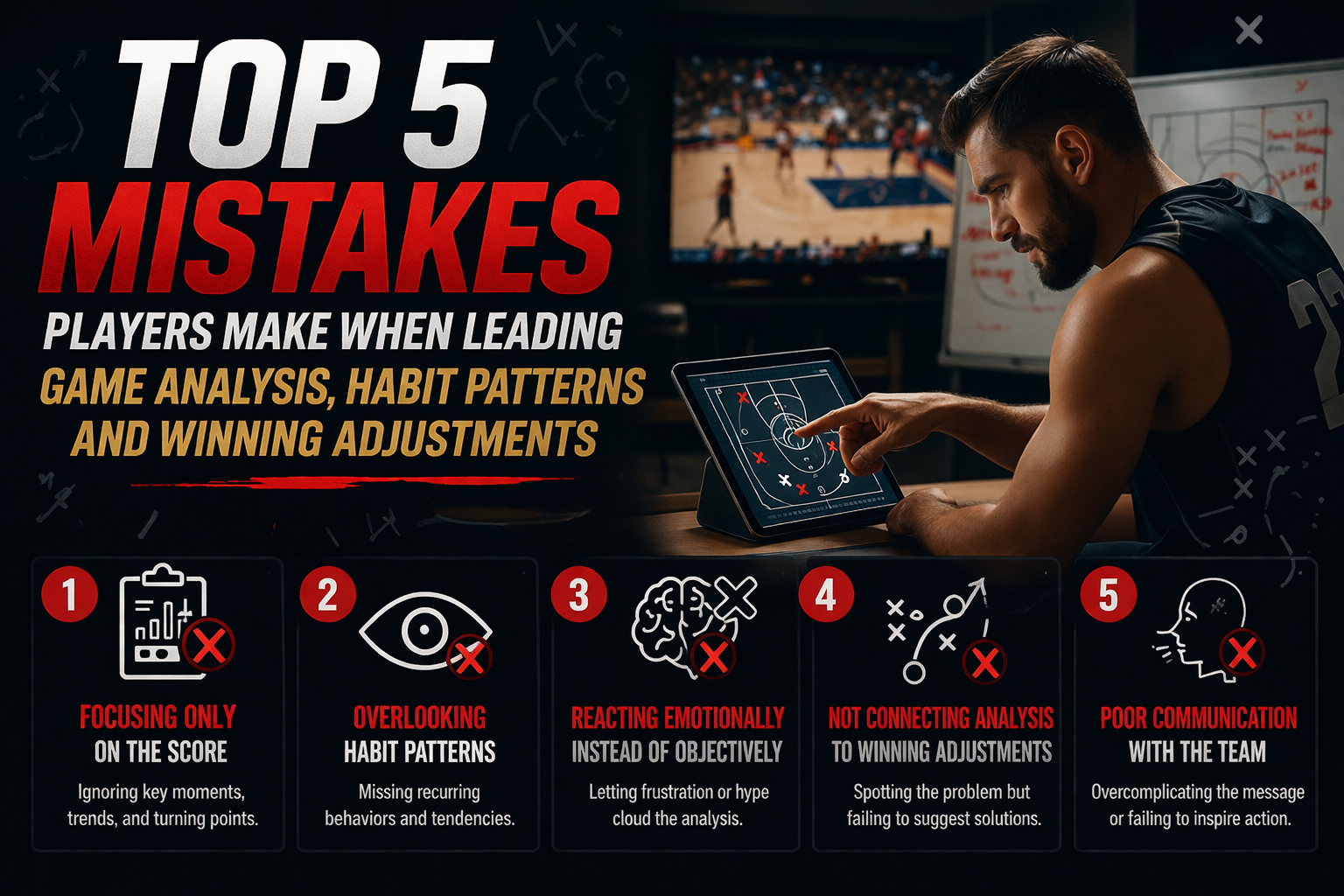
Mistake 1: Playing Not to Lose
What Happens:
- Safer shots
- Less aggressive swings
- Avoiding risk
Why It Fails:
- Gives control to opponent
- Reduces shot quality
- Invites pressure
Adjustment:
- Maintain controlled aggression
- Focus on execution, not outcome
- Commit fully to each shot
Mistake 2: No Tactical Adjustment
What Happens:
- Player keeps the same strategy
- Ignores opponent changes
Why It Fails:
- Opponent adapts
- Momentum shifts
Adjustment:
- Recognize changes early
- Add variation (spin, height, direction)
- Disrupt opponent rhythm
Mistake 3: Loss of Pattern Discipline
What Happens:
- Random shot selection
- No clear structure
Why It Fails:
- Increases unforced errors
- Removes consistency
Adjustment:
- Use 1–2 trusted patterns
- Repeat under pressure
- Simplify decision-making
Mistake 4: Poor Body Management
What Happens:
- Reduced footwork intensity
- Slower recovery
- Fatigue affecting timing
Why It Fails:
- Leads to short balls
- Weak positioning
- Late contact points
Adjustment:
- Maintain movement intensity
- Use breathing control between points
- Stay physically engaged
Mistake 5: No Closing Strategy
What Happens:
- Playing the same style as earlier
- No shift in mindset
Why It Fails:
- Closing requires different tactics
- Missed opportunities to finish
Adjustment:
- Shorten points
- Attack earlier
- Play with clear finishing intent
Case Reference: Alex Eala vs Jelena Ostapenko
At 5–1:
- Lead was strong
- Control was present
But:
- Slight passivity
- No tactical shift
- Opponent increased aggression
Result:
- Momentum reversed
- Six straight games lost
This is a classic example of habit repetition without adjustment.
Innovation Concept: Habit Loop Breakdown System (HLBS)
Introduce a system for your site:
Habit Loop Breakdown System (HLBS)
Tracks:
- Repeated errors under pressure
- Shot selection patterns
- Decision-making consistency
Goal:
- Identify loops
- Break them with targeted adjustments
Example:
- Repeating short balls → train deeper targeting
- Passive rallies → train early attack patterns
Game Adoption: How to Break the Mistake Cycle
1. Awareness First
Recognize repeated mistakes during the match.
2. One Adjustment Rule
Change one element immediately:
- Spin
- Direction
- Tempo
3. Between-Point Reset
- Breathe
- Refocus
- Decide next pattern
4. Pre-Defined Responses
Prepare solutions before matches:
- If opponent attacks → add height
- If rallies speed up → slow tempo
5. Train Under Pressure
Simulate:
- Leading 5–2
- Serving for the set
Practice adapting, not just executing.
Key Insight: Winning Requires Change
The biggest mistake is not the error itself.
It is continuing the same behavior without adjustment.
Winning players:
- Recognize patterns
- Adapt quickly
- Stay proactive
Final Thought
Leads are not secured by playing safe.
They are secured by:
- Staying aggressive
- Adjusting tactically
- Breaking negative habits immediately
In tennis, the player who adapts faster wins.