
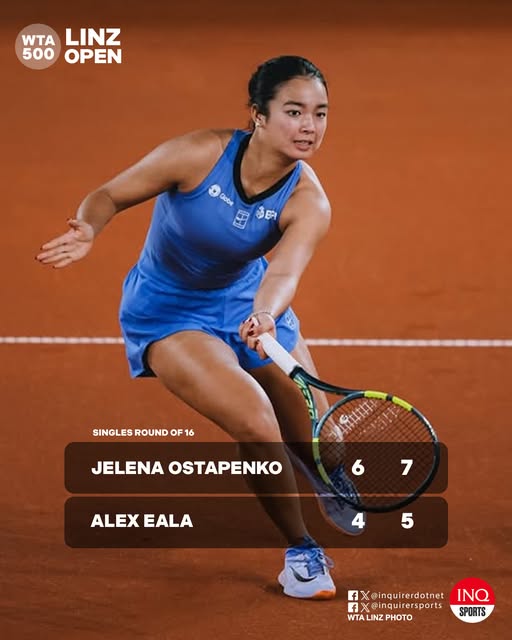
Match Summary
Alex Eala fell to Jelena Ostapenko 6-4, 7-5 at the Linz Open.
The key moment:
Eala led 5–1 in the second set, one step away from forcing a decider.
Then everything changed.
Ostapenko won six straight games to close the match.
What Happened? (Game Breakdown)
Phase 1: Eala in Control
- Solid rally tolerance
- Smart shot selection
- Controlled tempo
- Forcing Ostapenko into errors
At 5–1, Eala had:
- Momentum
- Confidence
- Tactical advantage
Phase 2: The Shift Begins
From 5–2:
- Ostapenko started hitting high-risk winners
- Tempo increased dramatically
- Points shortened
Eala’s response:
- Became more passive
- Focused on “not losing” instead of winning
This is the first sign of a mental choke
The Mental Choke: What It Really Means
A choke is not just nerves—it’s a shift in decision-making under pressure.
Key Signs in This Match:
- Safer shots instead of aggressive patterns
- Slower reaction and hesitation
- Loss of tactical clarity
- Playing the score (5–1) instead of the opponent
Tactical Failure: No Game Adjustment
This is where the match was lost.
What Eala SHOULD Have Done:
1. Slow the Match Down
- Use longer routines between points
- Break Ostapenko’s rhythm
2. Target Patterns
- Attack Ostapenko’s movement
- Use high balls to disrupt timing
3. Change Spin & Height
- Add variation (slice, loop, depth changes)
- Avoid flat rally exchanges
4. First-Strike Tennis
- Finish points early instead of extending rallies
What Actually Happened:
- Continued baseline exchanges
- Allowed Ostapenko to dictate
- No visible tactical reset
- No pattern disruption
Result: Momentum completely flipped
Why Ostapenko Won (Winning Adjustment)
Jelena Ostapenko did one thing extremely well:
She committed fully to aggression.
- Took the ball earlier
- Increased risk tolerance
- Played without fear
This forced Eala into:
- Defensive positions
- Short balls
- Mental pressure
Innovation Insight: “Closing Ability Index”
For your website (cebutennis.com), this match is a perfect case study.
Create a new metric:
Closing Ability Index (CAI)
Measures:
- Performance when leading (e.g., 5–1 situations)
- Ability to finish sets
- Error rate under pressure
Eala in this match:
- High control early
- Low closing efficiency
Game Adoption: How Eala Can Improve
This loss is not weakness—it’s a learning breakthrough moment.
1. Pressure Simulation Training
- Practice serving for sets repeatedly
- Simulate scoreboard pressure
2. Pattern Discipline
- Define 2–3 “go-to” winning patterns
- Use them under pressure automatically
3. Mental Reset System
- Between-point routine (breathing + focus cue)
- Detach from score
4. “Kill Zone” Mindset
At 5–1:
- Play MORE aggressive, not less
- Close fast, don’t protect the lead
Big Lesson: Tennis Is Won in Moments Like This
Matches are not decided by overall play—but by critical moments.
Eala proved she can compete.
But elite players win because they:
- Adjust faster
- Stay aggressive under pressure
- Close when it matters most
Final Analysis
This was not just a loss—it was a lesson in elite-level tennis.
Alex Eala had the match in her hands.
But against a player like Jelena Ostapenko,
one mental drop + zero adjustment = instant punishment.