
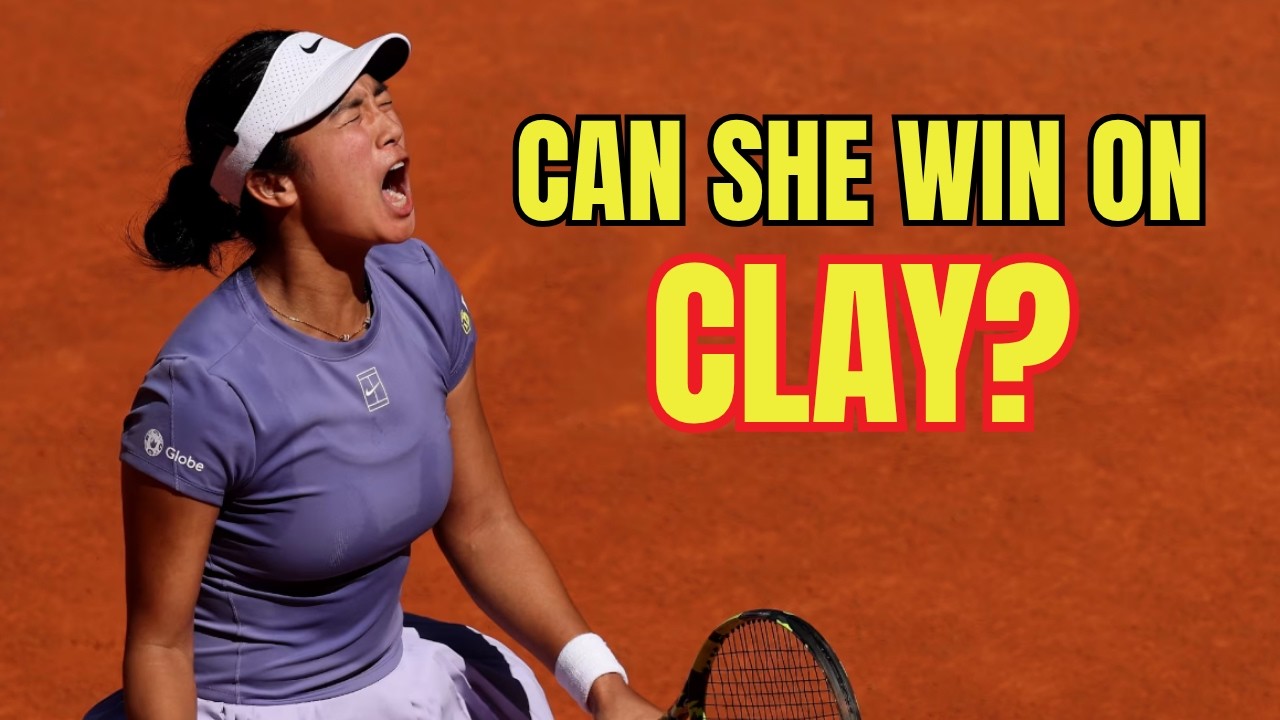
Hard Court as the Reality Check
For Alex Eala, hard courts are the most honest surface in tennis. Unlike clay, which rewards patience, or grass, which rewards instinct, hard courts expose balance—between offense and defense, between control and aggression, between intention and execution.
This is where Eala’s transition from junior dominance to WTA-level consistency is being tested.
Core Identity on Hard Court
Eala’s natural strengths translate differently on hard courts:
- Clean ball striking, but not overwhelming power
- Left-handed angles remain effective but less exaggerated
- Strong anticipation and court awareness
- Ability to absorb pace and redirect
However, hard courts reduce her margin for error. Points are shorter. Decisions must be faster. Hesitation becomes costly.
Performance Pattern Analysis
1. Rally Length Compression
On hard courts:
- Points are typically decided within 3–6 shots
- Opponents take the ball earlier
- Serve + first ball becomes decisive
Impact on Eala:
Her natural tendency to construct points is often disrupted before it fully develops.
2. Serve and Return Reality
Serve:
- Not yet a consistent weapon
- Can be attacked by aggressive returners
Return:
- Solid in neutralizing second serves
- Struggles against elite first serves
Conclusion:
Eala often starts rallies at a disadvantage, especially against top-tier opponents.
3. Tempo Control
Hard courts favor players who dictate tempo early.
- Eala prefers rhythm and variation
- Opponents impose pace and shorten exchanges
Result:
She is frequently reacting instead of controlling
Cross Examination of Game Maturity
1. Decision Speed Under Pressure
Observation:
Eala reads the game well—but sometimes reacts half a second late.
Maturity Gap:
At elite level, recognition is not enough—execution must be immediate.
Adjustment:
Simplify decision trees:
- Neutral ball → crosscourt
- Short ball → step in
- Defensive ball → high and deep
Reduce hesitation by reducing options.
2. First Strike Adoption
Observation:
Eala builds points but rarely initiates early dominance.
Maturity Gap:
Top hard-court players take control within the first two shots.
Adjustment:
Develop a “first-strike mindset”:
- Serve → target next ball aggressively
- Return → aim deep middle or opponent’s weaker wing
3. Handling High-Pressure Moments
Observation:
Level drops slightly on break points and tight games.
Pattern:
- Safer shots become shorter
- Aggressive intent becomes passive
Maturity Gap:
Elite players maintain depth and intent under pressure.
Adjustment:
Adopt “pressure patterns”:
- Default to high-percentage crosscourt rallies
- Avoid low-margin winners
- Prioritize depth over speed
4. Transition from Defense to Offense
Observation:
Eala defends well but delays counterattack.
Maturity Gap:
Top players convert neutral balls into offense quickly.
Adjustment:
Introduce trigger recognition:
- Ball inside baseline → step in immediately
- Opponent stretched → change direction
Tactical Adjustments for Hard Court Success
1. Serve Evolution
- Improve first-serve percentage (consistency over speed)
- Use wide serve to open court
- Develop reliable second serve with variation
Goal: Start rallies neutral, not defensive
2. Return Positioning
- Step slightly inside baseline on second serves
- Block deep against big first serves
- Avoid giving short returns
3. Court Positioning
- Play closer to baseline
- Take ball earlier
- Reduce time given to opponent
4. Controlled Aggression
Eala does not need to out-hit opponents—she needs to:
- Redirect pace
- Use angles
- Finish points with placement
High-Pressure Match Scenarios
Scenario A: Against Power Players
Example archetype: players like Elena Rybakina
Challenge:
- Limited time
- Heavy baseline pressure
Solution:
- Extend rallies when possible
- Use height and spin variation
- Target movement, not power exchanges
Scenario B: Against Counterpunchers
Challenge:
- Long rallies
- Few free points
Solution:
- Take initiative earlier
- Avoid endless neutral exchanges
- Create angles and finish decisively
Mental and Motivational Combat Layer
1. Accepting Physical Disadvantage
Eala will not overpower most opponents.
Adoption:
- Focus on intelligence over force
- Win through positioning and anticipation
2. Competing Without Fear
Hard courts reward bold decisions.
Key Shift:
- Replace hesitation with commitment
- Accept errors as part of aggressive intent
3. Emotional Stability
Momentum swings faster on hard courts.
Requirement:
- Reset quickly after lost points
- Maintain identity regardless of score
Strategic Adoption Framework
To evolve on hard courts, Eala must integrate:
Identity Shift
From:
- Reactive constructor
To:
- Proactive disruptor
Tactical Shift
From:
- Long rally preference
To:
- Early control with option to extend
Mental Shift
From:
- Safe play under pressure
To:
- Structured aggression under pressure
Performance Ceiling Projection
If adjustments are adopted:
- Increased competitiveness against Top 20 players
- Improved ability to close tight sets
- Higher win rate on faster surfaces
If not:
- Matches remain close but difficult to finish
- Vulnerability against first-strike players persists
Final Insight
Hard courts do not require Alex Eala to change who she is—they require her to execute faster, decide earlier, and commit fully.
Her success will depend on one transformation:
Not from defensive to aggressive—but from delayed intention to immediate action.
That is the difference between staying competitive and becoming consistently dangerous at the highest level.